Third-party rankings are constantly scanning and ranking communities based on “best of” or “worst of”. Frankly, it can be exhausting to keep up with.
Some use a city name when they really mean a metropolitan or combined statistical area, leaving neighboring towns to wonder what they missed and the named city to take a bow for recognition that belongs to the whole region.
I often say that if Johnson City wins an award, you can almost bet that Kingsport and Bristol were included in the analysis but left off the name for brevity. It’s kind of hard to use the official name: “Johnson City-Kingsport-Bristol, TN-VA Combined Statistical Area”. Or if Kingsport wins an award, it usually means the Kingsport-Bristol Metropolitan Area, which includes Blountville, Bluff City, Piney Flats, Church Hill, Rogersville, Gate City, Abingdon, and more.
For example, U.S. News & World Report identified Kingsport and Johnson City in its list of Best Places to Live in 2025-2026 based on four core pillars: housing affordability, job market strength, quality of life, and overall desirability.
The full list (in rank order) is Hendersonville, Franklin, Kingsport, Murfreesboro, Johnson City, and Nashville.
That’s a wide variety of sizes and geography.
Kingsport is the smallest of the group and has by far the lowest share of home sales from new construction, with just 7% built since 2020. Johnson City is next at 20%. The Middle Tennessee cities on the list range from roughly 26% to 33%, and some of the fast-growing suburban markets are well above that.
I’ve said for years that Kingsport needs newcomers to offset population decline. The numbers back me up, but the public is growing weary and downright rude to people inquiring about moving to Tennessee.
So how do we sort out where growth is needed and where it is overheated? Where can a local salary sustain a reasonable mortgage? Where are out-of-state buyers driving up prices to a level that locals can no longer afford?
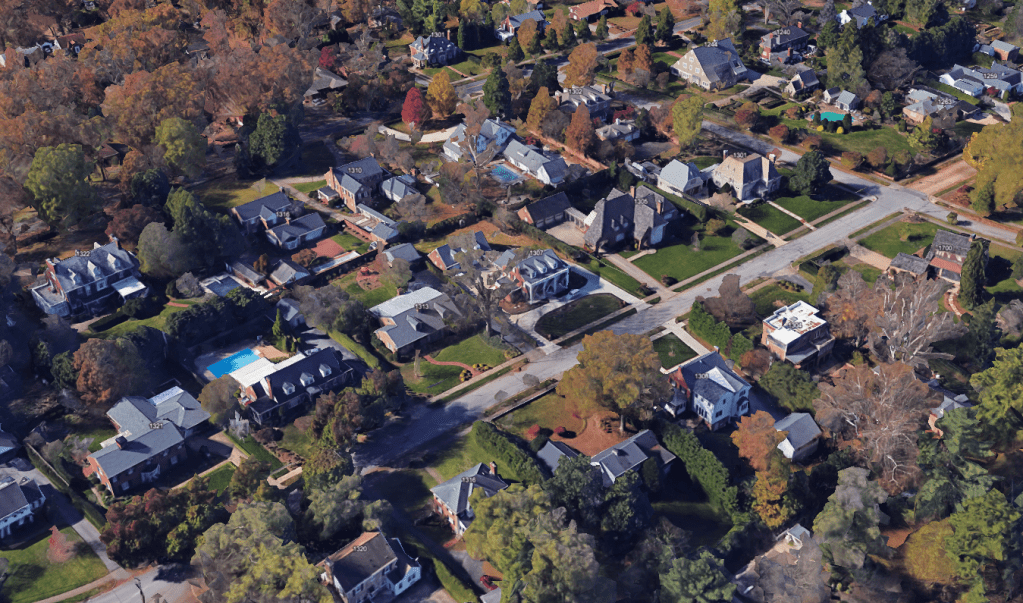
I categorize Kingsport as a mature market, meaning most of the home sales are pre-existing in traditional neighborhoods with charm, character, mature trees, and good bones. There’s an extensive network of sidewalks, curbs, gutters, and streets.
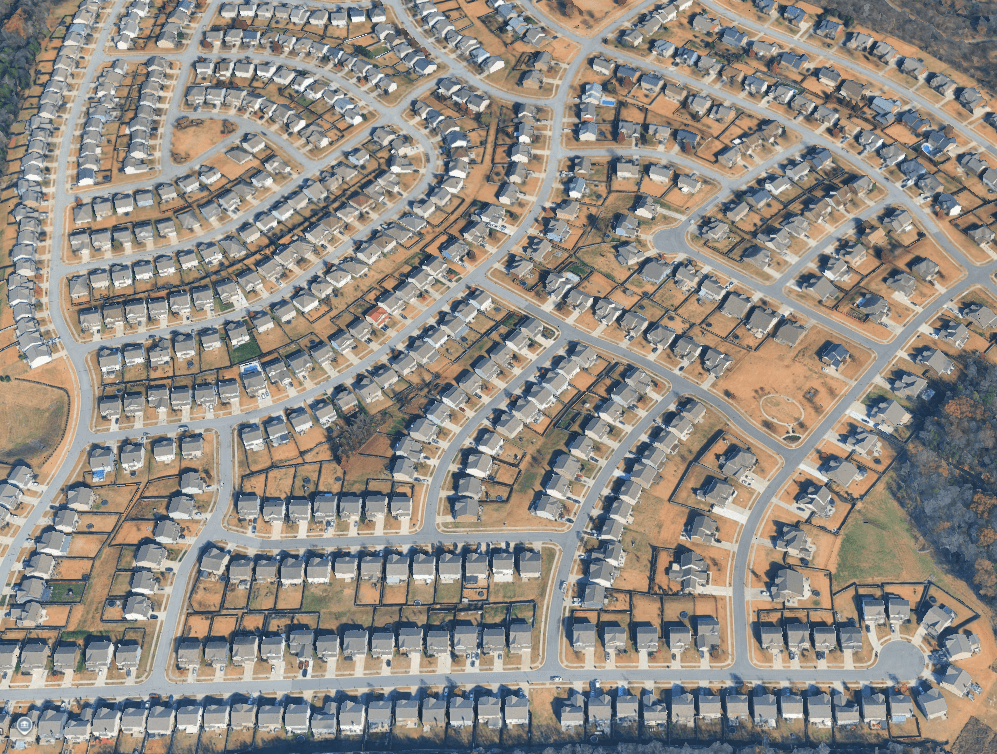
An emerging market would be where mass grading has cleared the land to make way for new construction. There are neighborhood identification signs to bolster marketing, embellished with lushly landscaped boulevard entrances to distract from the lack of trees. Perhaps the area is growing faster than public infrastructure can keep up. There are a myriad of homeowner associations and utility districts to compensate. That’s where the strongest objections are being voiced.
I created my own spreadsheet to examine Tennessee cities with 25,000+ zip code population, using home sales from the 12 months ending March 31, 2026. So this is not just a one-month snapshot. It reflects the full year of market activity.
Where can a local still afford to buy?
The clearest places where a local still appears to have a fighting chance are the mature markets with a strong share of homes selling under $300,000 and a relatively small share selling above $500,000.
Bristol stands out. So do Kingsport, Greeneville, Elizabethton, Jackson, Dyersburg, McMinnville, Athens, and Memphis. In these places, the existing housing stock is still doing the heavy lifting. Crossville and Sparta also remain comparatively attainable in price mix, even though both have unusually high turnover for their size. Tullahoma, Cleveland, and Shelbyville still look workable, though tighter than the strongest mature markets.
Johnson City, Chattanooga, Cookeville, and Morristown land in the middle. They are still more mature than emerging, but they are no longer especially comfortable for median local incomes. Knoxville is tighter still. It is not a classic new-subdivision market, but it is plainly a market where locals are under pressure.
At the other extreme are the places where the affordable segment has thinned dramatically. Nashville, Murfreesboro, Hendersonville, Lebanon, Mount Juliet, Gallatin, Spring Hill, and Ooltewah-Collegedale all show very small shares of homes under $300,000. In Franklin and Brentwood, the affordable segment is almost beside the point.
Where are the mature, high-quality places?
Kingsport is still the clearest example. It is mature in the housing sense, with very little of the market driven by recent construction. But it also carries outside validation for quality of life. That combination matters. It suggests a place that is not winning by frantic expansion, but by the strength of what is already there.
Johnson City belongs in the high-quality conversation too, though it is more strained. Bristol does not appear on the U.S. News list–but it is the same metro as Johnson City and Kingsport with the same strengths: existing neighborhoods, established infrastructure, and a market still more tied to local incomes than to upper-end newcomers.
West and Northwest Tennessee deserve mention here, too. Jackson and Dyersburg are not usually the loudest places in statewide conversations, but the housing data says they should not be overlooked. They look more mature, more grounded, and more tied to local incomes than the emerging suburban corridors of Middle Tennessee. Memphis also remains much more of an existing-home market than a new-construction pressure market. Bartlett is similarly mature, though more affluent. Collierville and Arlington are premium suburban versions of the same broad pattern: stable, high-income, and not churn-driven.
Where are the balanced places?
To me, the balanced places are not necessarily the cheapest places or the fastest-growing places. They are the places where there is enough new construction to show energy and confidence, but not so much that the market feels detached from local wages or public systems.
Clarksville is probably the best example of balance in the data. It has a large amount of recent construction, but it still has a meaningful share of sales below $300,000 and a relatively modest luxury segment compared to the hottest Middle Tennessee suburbs. Cleveland also looks balanced. So do Oak Ridge, Maryville, Tullahoma, Athens, Portland, Jonesborough, Dickson, Manchester, La Vergne, Soddy-Daisy, and Powell. These are places with growth, turnover, and some new construction, but they do not yet look like the market has fully outrun the local base.
Columbia also lands in that broad, balanced category, although it is running hotter than some may assume. It has strong turnover, substantial recent construction, and more pressure than a traditional small-town market.
Millington is more modest and transitional. It is not a premium suburb, but it also is not a high-pressure boom market.
Where is growth overheated?
This is where the statewide pattern becomes clearest. The hottest and most pressure-prone markets are mostly in Middle Tennessee and in a few outer-ring submarkets around larger metros.
Mount Juliet is the strongest example. More than 60% of its sales were built since 2020, only a tiny share were under $300,000, and more than half were above $500,000. Spring Hill is even more extreme at the upper end. Gallatin and Lebanon are not far behind. Murfreesboro is larger and more diverse, but it is still clearly under growth pressure. Hendersonville also fits the pattern of a high-quality but expensive suburban market. Smyrna belongs in this conversation too, although it is slightly less extreme than the strongest outliers.
Nashville is the expensive core that radiates pressure outward. Franklin and Brentwood are premium markets supported by high local incomes, but they are still part of the same broader story of thinning attainability.
East Tennessee has a few versions of that same story. Ooltewah-Collegedale is one of the clearest emerging and pressure-prone markets in the state. Lenoir City is another smaller place being pulled hard by the orbit of a larger market. It is not as large or prominent as Knoxville, but its housing mix suggests it is increasingly being shaped by regional demand rather than strictly local incomes.
Where are out-of-state buyers, retirees, or metro spillover buyers changing the market?
The places with the highest sales volume on a per capita basis help answer that. Sevierville and Crossville are in a class of their own. Those are not just ordinary local-income markets. Sevierville clearly reads as a destination and amenity market, while Crossville looks heavily influenced by retiree and lifestyle demand.
After them come Clarksville, Gallatin, Sparta, Lenoir City, Columbia, Spring Hill, Lebanon, Maryville, Oak Ridge, Dickson, Portland, Jonesborough, Tullahoma, and McMinnville. The common denominator is that these are places being pulled by forces larger than their immediate local wage base, whether tourism, retirement, military, employment concentration, or metropolitan spillover.
That also helps explain which small places are being overtaken by their faster-growing neighbors. Mount Juliet, Gallatin, Lebanon, Hendersonville, Ooltewah-Collegedale, Lenoir City, and to a lesser degree Jonesborough all fit that description. Their housing markets increasingly look more like the larger metro orbit around them than like the traditional town itself.
Some Tennessee towns did not set out to become boom markets. They were simply living their lives until metro spillover, retiree demand, or destination appeal engulfed them and began rewriting the local housing market. In all of these cases, the issue is not that the place is failing. In many ways, it is succeeding too fast. But that kind of success can leave longtime locals feeling as though the market changed around them before they had time to catch their breath.
So what does the whole state look like?
West and Northwest Tennessee generally look more mature and more affordable. Memphis, Jackson, Dyersburg, Bartlett, Millington, Collierville, and Arlington all fit somewhere along that spectrum, from modestly attainable to premium and affluent, but they are mostly not emerging boom markets.
Middle Tennessee has the strongest concentration of emerging, expensive, and pressure-prone places. Nashville, Franklin, Brentwood, Hendersonville, Murfreesboro, Mount Juliet, Lebanon, Gallatin, Spring Hill, and Smyrna all show some combination of newer construction, thinner affordability, and stronger upper-end pricing. Clarksville, La Vergne, Columbia, Dickson, Portland, Shelbyville, Manchester, McMinnville, Sparta, and Tullahoma fill in the rest of the middle Tennessee picture, ranging from balanced to tightening to high-turnover.
East Tennessee is the most mixed region of all. Kingsport and Bristol remain notably mature and grounded. Johnson City is mature but tightening. Knoxville is expensive enough to squeeze locals even where new construction is not the whole story. Chattanooga is also mature but tightening. Cleveland, Oak Ridge, Maryville, and Jonesborough look more balanced.
In Middle Tennessee, beyond the Nashville metro, Cookeville is a useful reminder that even secondary regional centers are feeling the squeeze. It is not an emerging boom market in the suburban sense, but it is clearly tighter for locals than the most mature and grounded markets in the state.
That is the key distinction I keep coming back to. Emerging does not automatically mean affordable, and mature does not mean stagnant. Emerging places are often energetic, ambitious, and visibly growing. But many are also dealing with growing pains, and much of their new housing is landing at price points beyond what the median local household can comfortably support. Mature places are more grounded, more pragmatic, and more settled. Their challenge is different. They often remain more attainable, but largely because older existing homes are still carrying the market.
That may be the real lesson in the data. Tennessee does not simply have hot places and affordable places. It has emerging places that promise momentum, mature places that offer confidence, premium places that operate by a different income logic, and a smaller group of balanced places that seem to be managing growth without completely outrunning local incomes.
If I am looking for where growth is needed, I still come back to Kingsport and places like it. If I am looking for where growth is overheating, I look first to the places where post-2020 construction is surging while affordability is slipping away. And if I am looking for where a local salary still has a reasonable chance, I look to the mature markets where older homes, established neighborhoods, and proven civic systems are still doing the heavy lifting.
All things considered, that may be Kingsport’s real advantage. It is not trying to invent itself overnight. It already knows what it is. It is a mature place in the best sense of the word: grounded, practical, and well formed. Its neighborhoods were not stamped out all at once. Its bones were laid down over time. Its public life was shaped by the Model City ideal that a community should be more than rooftops and roadways. It should have parks, public spaces, and a shared civic life worth investing in.
That still shows. Kingsport has great schools. It has an unusual abundance of parks and public spaces. It has a riverfront that remains an asset, lake access close at hand, and a mountaintop nature preserve that gives the city both identity and breathing room. It has sidewalks, shade trees, established neighborhoods, and the kind of civic infrastructure that cannot be mass graded into existence in a few short years. Those things do not always show up fully in housing spreadsheets, but they are exactly why mature places endure.
That does not mean Kingsport should stand still. It does need newcomers. It does need investment. It does need confidence in its future. But there is a difference between thoughtful growth and growth that overruns the very qualities people came for in the first place. Kingsport’s opportunity is not to mimic the most overheated markets in Tennessee. Its opportunity is to build on what it already has: a city planned with intention, blessed with natural assets, and still anchored by a strong public realm.
In a state where so many places are being reshaped by speed, spillover, and strain, Kingsport offers something increasingly rare: confidence without chaos. All things considered, that may be exactly what many people are looking for.
 Kingsport Spirit
Leave a comment