I’m a lifelong student of city management, planning, history, demographics, and socioeconomics. Honestly, sometimes I wish I wasn’t—it can be exhausting. I can’t just “turn it off.” I still have a folder filled with maps of fictitious cities that I drew in middle school. I spent more time naming streets, designing parks, and placing schools than I care to admit.
That hasn’t changed. I can’t simply visit a city and enjoy the scenery; I’m compelled to dig into the numbers to figure out why it thrives—or struggles. On a recent trip to Middle Georgia, I was struck by how affordable the housing seemed—until I looked up the school and safety scores. They were not good. In contrast, nearby counties had higher home prices but better scores. That’s the cause-and-effect of public policy in real time.
The question always lingers: what can be changed, and what must be accepted? That’s when the Serenity Prayer comes to mind—accept what cannot be changed, summon the courage to act where possible, and seek the wisdom to know the difference.
I’m constantly benchmarking Kingsport against these metrics, and time after time I reaffirm why I choose to stay here. If I ever find a city that better meets my needs, I’d consider moving. But when I weigh “less traffic” against “more stuff,” I remain content.
Recently I attended the Regional Workforce Housing Alliance, a bi-state initiative bringing together stakeholders from Tennessee and Virginia. The first half focused on homelessness, the second on housing prices and availability. I went in assuming the discussion would revolve around whether essential workers—a nurse married to a firefighter, for example—could realistically afford a single-family home in our region. Instead, we also dug into apartment affordability and the painful realities of homelessness.
I’ve poured countless hours into that issue myself, often feeling my efforts go nowhere. I know I’m not alone. Homelessness quickly branches into deep, complicated challenges—mental health, broken families, addiction, and strained social services. These are complex, heartbreaking problems without simple solutions. I have great admiration for those who continue to fight that fight day after day and look to support them in any way I can, while guarding my own heart. I tend to take on everybody else’s problems to the point that I jeopardize my own health. I guess the part that’s most frustrating for me is that someone has to first be willing to accept a hand up, not just a handout.
That said, Kingsport still has an unusually strong base of affordable homes—many built rapidly after World War II. They remain in safe, stable neighborhoods with good schools, and over the decades they’ve been remodeled and lived in by family after family. If they were undesirable, they would have been abandoned long ago. Instead, the city’s vigilant code enforcement has kept problems contained, ensuring these neighborhoods endure.
On the new construction side, Kingsport has a healthy share of workforce housing in the $250,000–$350,000 range—the sweet spot for many families. Critics may scoff at vinyl siding or higher density, but affordability always comes with trade-offs. More features mean fewer families can buy in.
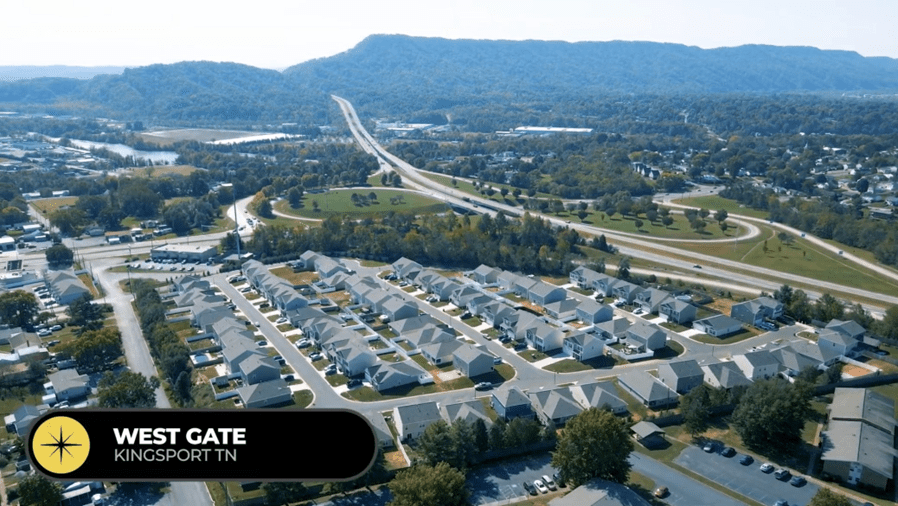
One project I admire is the redevelopment of the old Walmart site on Stone Drive and I-26, where roughly 80 homes now stand on what was once a massive parking lot. At first, skeptics jeered: “Who would want to live in an old Walmart parking lot?” But when the dust settled, an equal number of buyers came from Kingsport, the wider Tri-Cities, and out of state. I drove through recently—it looked like any other suburban neighborhood: families mowing lawns, tending gardens, living the American dream. For many, these homes will be steppingstones—places to build equity, move up, and open the door for the next family.
So why are homes and apartments so expensive? At the most basic level, it comes down to supply and demand. More people want places to live than there are homes available, which drives up both purchase prices and rents. In some cases, wages haven’t kept pace with rising costs, widening the gap. Regulatory hurdles, construction costs, and limited land for development can all slow new housing supply. And when new homes aren’t built fast enough, competition spills over into older houses and apartments, bidding up prices there too.
After the 2008 crash, lending rules tightened dramatically. While safeguards were needed, I believe the pendulum swung too far. I’m not suggesting a return to subprime excess, but if we’re serious about solving affordability, we need to put all options on the table.
A recent Pew Charitable Trusts report underscored this point. The U.S. faces a shortfall of 4 to 7 million homes. From 2017 to 2024, rents rose nearly 50% in metro areas, hitting lower-income neighborhoods hardest. Pew’s analysis showed that adding housing—even market-rate housing—slows rent growth most for older, more affordable units. A 10% increase in supply correlated with 5% less rent growth metro-wide, and places like Austin and Minneapolis saw steep declines in Class C rents when new supply came online. In other words, a rising tide does lift all ships.
For Kingsport, the lesson is clear: keep building, especially market-rate housing that fills gaps, even at higher price points. At the same time, we must keep a watchful eye on overall housing stock and ensure a balance of options for every stage of life and income level. Otherwise, families will naturally look elsewhere for the opportunities they can’t find here.
As my grandmother always said: “All things in moderation.” That’s true in housing too.
 Kingsport Spirit
Leave a comment