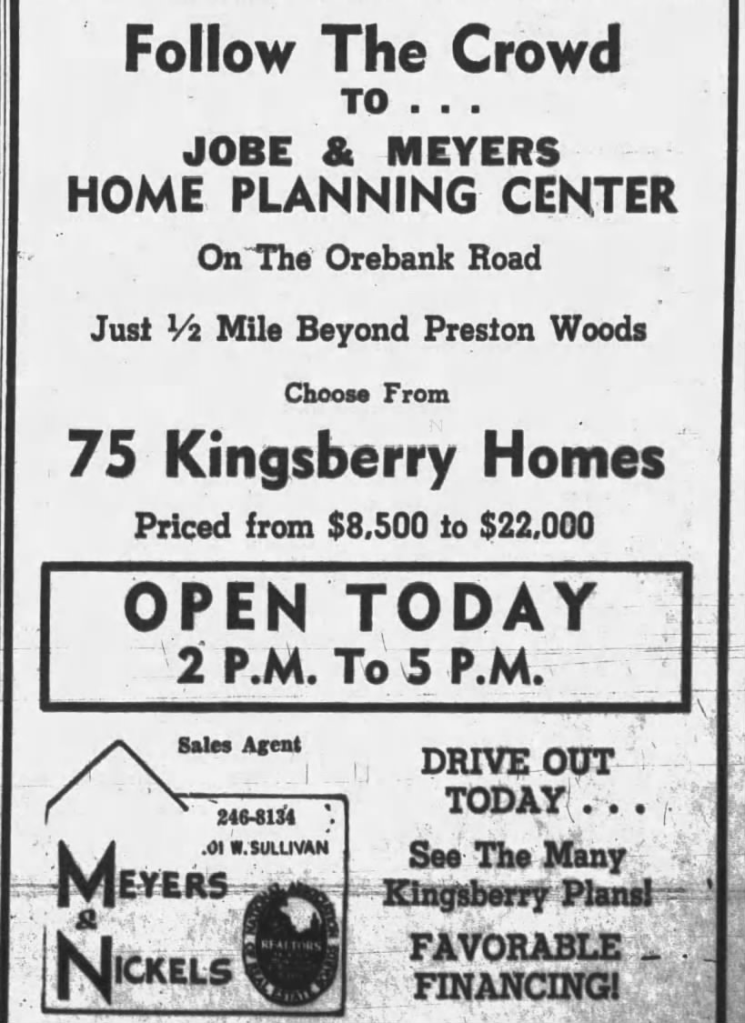
Did you know that one of Kingsport’s most desirable neighborhoods is made up of prefabricated homes? Don’t let the word prefabricated fool you. It simply means the home’s components were precision-cut in regional Boise Cascade factories and then shipped to the building site. From there, local builders assembled the houses on-site. Think of it like the next generation of Sears kit homes: efficient, well-built, and designed for lasting quality.
🏡 The Story of Kingsberry Homes: When Timber Became the American Dream
In the golden age of suburban growth—when cul-de-sacs were carving their way across the American landscape—there was a name quietly helping families step into the dream of homeownership: Kingsberry Homes.
You may not see them advertised anymore, but if you’ve driven through a mid-century neighborhood, especially in the South or Midwest, you’ve likely passed one. Built during the 1960s and early 70s, Kingsberry Homes were an innovative line of prefabricated houses created by the Boise Cascade Corporation, a major timber and paper company. But why did a lumber supplier start making homes?
🌲 From Forest to Front Porch
Boise Cascade had a vision: instead of just selling wood, why not turn that timber into entire houses?
At the time, the U.S. housing market was exploding. Veterans were returning home from World War II and Korea, the Baby Boom was underway, and millions of families were looking for affordable, modern homes. Federal programs like the GI Bill and FHA loans made buying a home easier than ever—but construction had to keep up. Fast.
Kingsberry Homes were Boise Cascade’s answer. They offered attractive, ready-to-build home kits that could be shipped across the country and assembled quickly by local contractors. Think Sears kit homes—but updated for the space-age suburbia of the 1960s.
🧰 Built to Last: Quality You Can Feel
One of the most impressive aspects of Kingsberry Homes was the build quality. These weren’t just quick-build kits—they were thoughtfully engineered for strength, durability, and comfort, often outshining today’s entry-level construction.
- ✅ 2×6 exterior wall studs in many models allowed for more insulation and stronger structural support
- ✅ Real wood cabinetry, trim, and solid-core doors—not particleboard or MDF
- ✅ Brick exteriors were common even in modest floor plans
- ✅ Plywood subflooring, not OSB
- ✅ Wider roof overhangs and generous eaves helped with shading and runoff
- ✅ Metal or wood-framed windows added longevity and character
- ✅ Better sound insulation thanks to thicker walls and framing precision
These homes were built in an era when quality materials were the standard—not the upgrade.
🏘️ What Made a Kingsberry Home?
Kingsberry offered several designs—Ranch, Split-Level, and even Colonial styles—geared toward middle-income families. The plans were simple but thoughtful: open kitchens, big windows, integrated garages, and plenty of room for a growing family.
Boise Cascade partnered with local builders and dealers who would handle assembly and finishing, blending national efficiency with hometown know-how. The homes popped up everywhere—from Georgia and Tennessee to Illinois and Oklahoma—often in brand-new subdivisions planned around young families and first-time buyers.
📉 So, What Happened?
By the late 1970s, the winds had changed. Inflation was high, mortgage rates were rising, and home construction was slowing down. The families Kingsberry served were feeling the pinch—and so was Boise Cascade. The company had expanded too quickly into businesses beyond lumber, and eventually, it began shedding those side ventures. The Kingsberry Homes line was one of the casualties.
🧱 The Legacy Lives On
Though the name faded from view, Kingsberry homes are still standing. They’re often modest brick ranchers or split-levels in neighborhoods that have matured over decades. Some have been updated, others still proudly show their mid-century bones.
Kingsberry Homes tell a uniquely American story—one of ingenuity, corporate ambition, and a country chasing the dream of homeownership. They may not be built anymore, but their legacy is framed into the lives of the families who lived—and still live—in them today.
The earliest newspaper reference to Kingsberry Homes that I found appears in 1946 in Morenci, Michigan. By 1957, the brand began expanding across the Southeast, starting with a manufacturing plant in Fort Payne, Alabama, and quickly spreading to cities including Birmingham, Huntsville, Atlanta, Jackson (MS), Valdosta, Columbus (GA), and Montgomery. Expansion continued in 1958 into Chattanooga, Indianapolis, Dayton, Iowa City, Pensacola, Greensboro, and Louisville, followed by further growth in 1959 to places like Hattiesburg, Knoxville, Biloxi, Vicksburg, and Macon. This timeline reflects rapid regional growth concentrated primarily in the Southeast and Midwest.
Kingsberry Homes expanded steadily across Tennessee between 1958 and 1969, beginning with major urban centers like Chattanooga (1958), Knoxville (1959), and Nashville and Memphis (1960). By 1961, the company moved into Kingsport and Greeneville, followed by Blountville and Jackson in 1962. Growth continued westward and eastward with entries into Clarksville (1964), Johnson City and Elizabethton in 1967, and Bristol in 1969.
Newspaper ads across the nation illustrate the geographic distribution, with the highest number in Alabama (13,000+), followed by Florida (11,000+), North Carolina (10,000+), and Louisiana (8,100+). Other states with significant numbers include Pennsylvania (8,000+), Georgia (7,700+), Illinois (7,600+), and Michigan (5,000+). Mid-range totals were found in Virginia (4,600+), Indiana (4,200+), Wisconsin (3,500+), and New Jersey (2,900). Several Southern and Midwestern states like Mississippi, Kentucky, Tennessee, Iowa, Maryland, and Ohio had between 2,300 and 2,800 ads, with smaller numbers spread across the remaining U.S. states.
Kingsberry home examples in the Beechcliff Estates neighborhood of Kingsport (Source: Zillow):
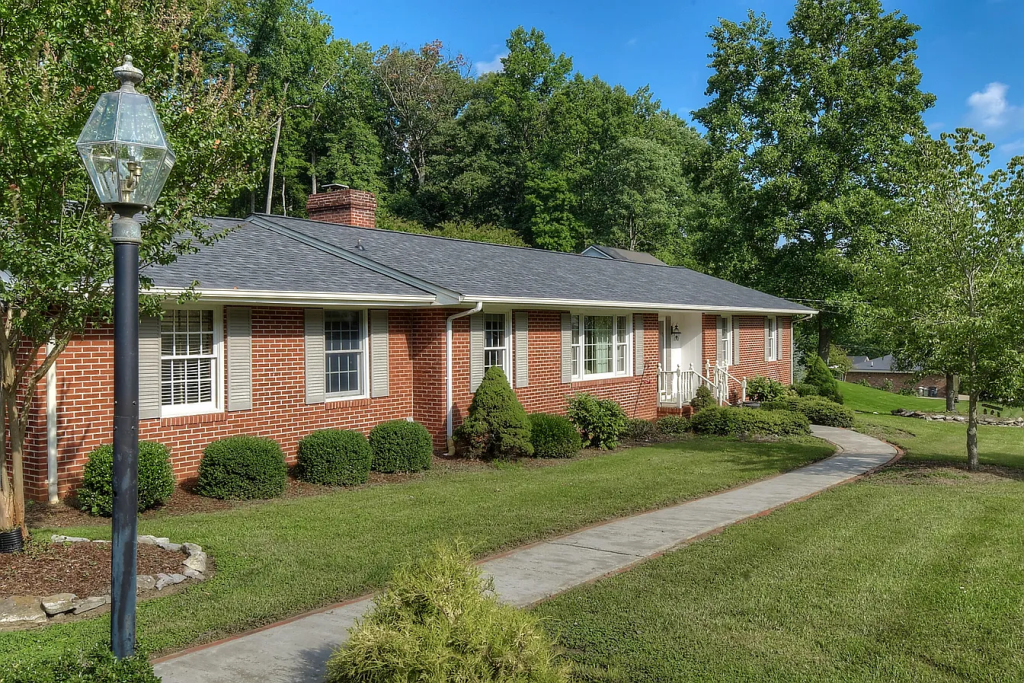
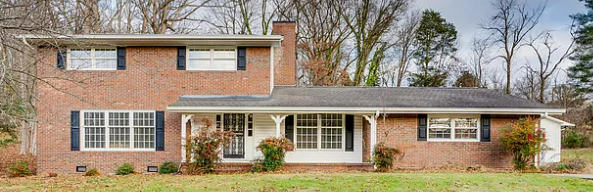
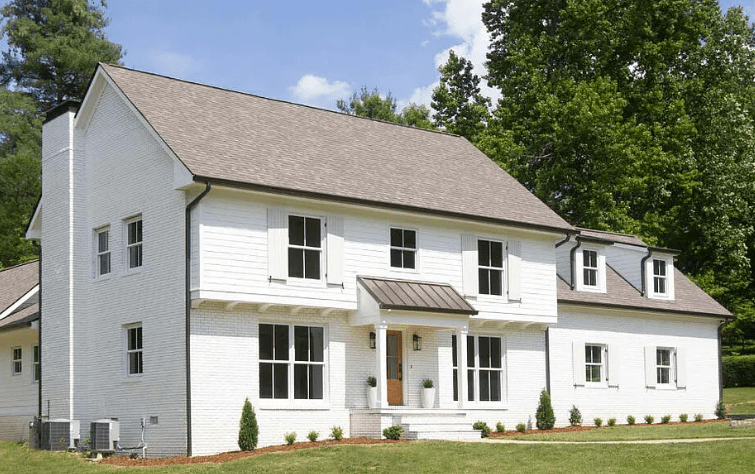
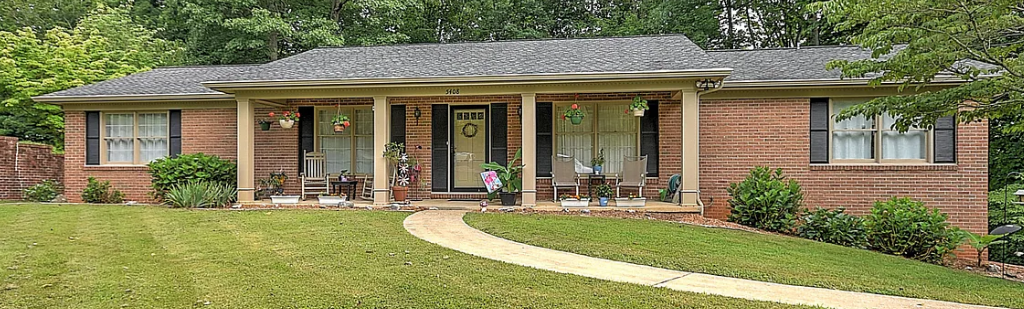
Kingsberry Homes weren’t limited to Beechcliff Estates, there were newspaper ads for organized developments of Kingsberry Homes in Jackson Heights and Briarwood Acres, too. Also, several homebuilders like Jobe & Meyers, Kenneth Murray, and Hubmann Construction, built on individual lots scattered throughout the region. If your home was built between 1964 and 1975, it might be a Kingsberry, too!
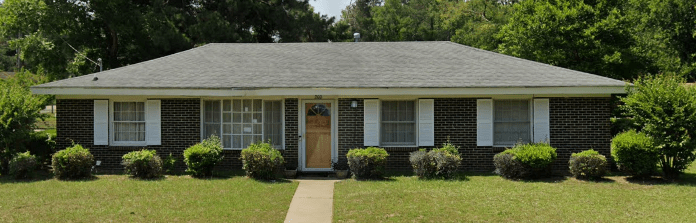
It’s also fun to use Google Image Search to match a local home with its identical Kingsberry twin all over the country. The Warren Plan was the most popular Kingsberry design. With a little digging, I was able to find an example in Selma, Alabama:
In fact, I found a Kingsberry home featured in a 2021 issue of Chapel Hill Magazine: Witness the Modern Transformation of a House Built in the ’60s. According to Zillow, that home is well over $1,000,000 in value today.
With staying power like these examples, I guess prefab shouldn’t be a dirty word after all.
Have a Kingsberry Home in your neighborhood or family? I’d love to hear about it in the comments!


Leave a Reply