11th in a 12-part monthly series to commemorate Sullivan County’s role in the 250th birthday of the United States of America
November | 11 of 12
Have you ever wondered how Sullivan County got its name?
The answer takes us back to 1779, when Tennessee didn’t even exist. We were part of North Carolina, and the Holston Valley was still very much on the American frontier.
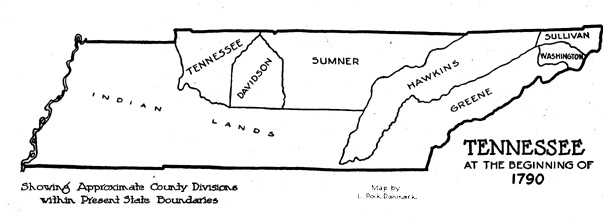
Think about that. We were in the middle of the American Revolution, a war that wouldn’t officially end until 1783. Independence was anything but certain. Yet here on the frontier, we were establishing counties and naming them for the Patriots fighting against the British Crown.
That’s a pretty bold statement when nobody knew who would win.
What if the Revolution had failed? What if the British had prevailed? We were naming our communities for men considered rebels and traitors by the Crown.
Many older colonial counties honored English kings, queens, and aristocrats. But Washington County, established in 1777, and Sullivan County, carved from it two years later, honored men actively fighting to overthrow British rule.
We weren’t waiting to see how the war turned out before choosing sides.
As settlers put down roots, they needed courts, public records, and local government closer to home. So, North Carolina established Sullivan County in 1779.
But here’s what I find particularly interesting.
They named it for John Sullivan, a 39-year-old Revolutionary War general from New Hampshire who had never lived here. He wasn’t some long-departed historical figure. His place in history was still being written.
Why Sullivan?
You’ve probably seen the famous painting of George Washington crossing the Delaware River on Christmas night in 1776. It’s one of the most recognizable images in American history.
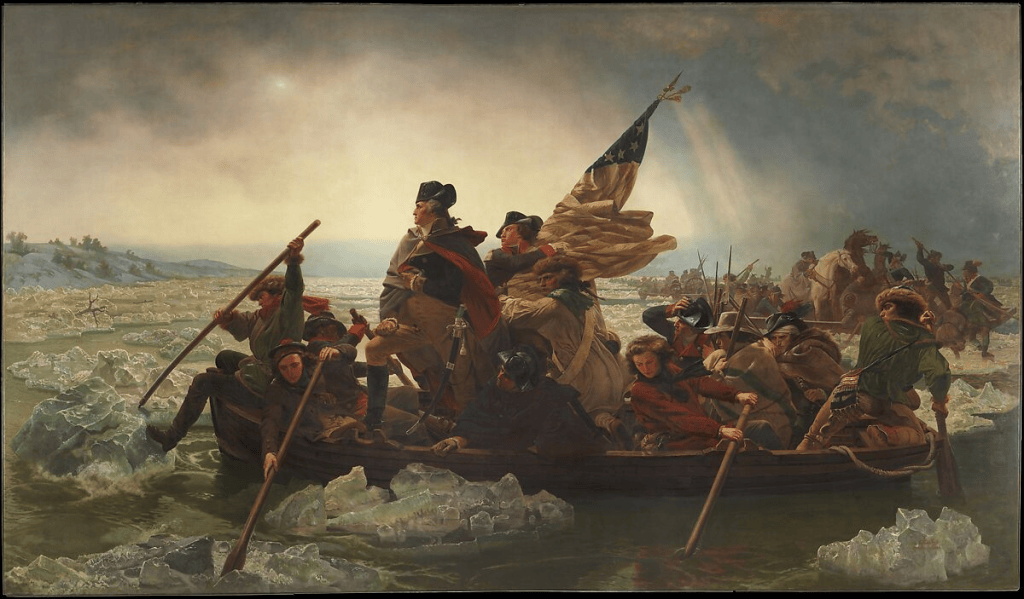
What you might not realize is how many familiar East Tennessee names were part of that remarkable operation.
Washington led approximately 2,400 soldiers across the icy Delaware in a desperate attempt to revive the American cause. The weather was miserable, the army exhausted, and the stakes enormous.
As the troops approached Trenton, Washington divided his army into two columns. General Nathanael Greene commanded one, with Washington accompanying him. General John Sullivan commanded the other, approaching along the river road.
Meanwhile, Henry Knox helped organize the difficult crossing and commanded the artillery.
Sound familiar?
Washington. Sullivan. Greene. Knox.
Four men who helped win one of the Revolution’s most important victories. Four counties in East Tennessee that would eventually bear their names.
And here’s where geography adds another interesting twist.
Washington County was established in 1777, Sullivan in 1779, and Greene in 1783. Today, those three counties form a chain across Northeast Tennessee, their namesakes connected by geography, just as they were by history.
Knox County, established in 1792, completes the connection farther down the valley.
The practice wasn’t unique to us. Across America, counties repeatedly took the names Washington, Sullivan, Greene, and Knox.
And these weren’t necessarily historical figures being honored long after their deaths. Henry Knox was serving as President George Washington’s secretary of war when Knox County was established in 1792. Imagine naming a county today for someone actively serving in the president’s cabinet.
But by 1794, we were beginning to honor people closer to home.
Sevier County was named for John Sevier, our future first governor. Blount County followed in 1795, honoring territorial governor William Blount. In 1796, Carter County recognized Watauga pioneer Landon Carter, Robertson County honored Nashville founder James Robertson, and Grainger County was named for Mary Grainger Blount, the territorial governor’s wife. Cocke County followed in 1797, honoring William Cocke, one of Tennessee’s first U.S. senators.
There’s a pattern here. In the beginning, we named counties for people helping create America. As Tennessee took shape, we increasingly honored the people helping create Tennessee.
As America celebrates its 250th anniversary, perhaps it’s worth looking differently at the names on our highway signs.
Think about it. George Washington, John Sullivan, Nathanael Greene, and Henry Knox were all connected by one icy river, one daring military operation, and one remarkable victory.
Nearly 250 years later, their names remain connected on the map of East Tennessee.
And there’s something pretty special about that.
Next in the series: December 2026 | 12 of 12 — America’s First Frontier: Sullivan County’s Role in Our Nation’s Story


Leave a Reply