The Kingsport Fire Department released its Annual Report, and it brought back memories of my days in city government when we were explaining the benefits of living inside the city.
Annexation discussions forced us to explain why city services matter. And, not to worry, Tennessee ended unilateral annexation of existing residential areas over a decade ago. But at the time, we had to answer a basic question: Why should I care? It was healthy to remember our why.
I recall one resident telling me, “If my house catches on fire, I’d rather it burn to the ground than be partially saved. I don’t need the fire department.”
I told him that “Fire Department” is almost a misnomer these days.
KFD certainly fights fires, but nearly 77% of its calls are medical related.
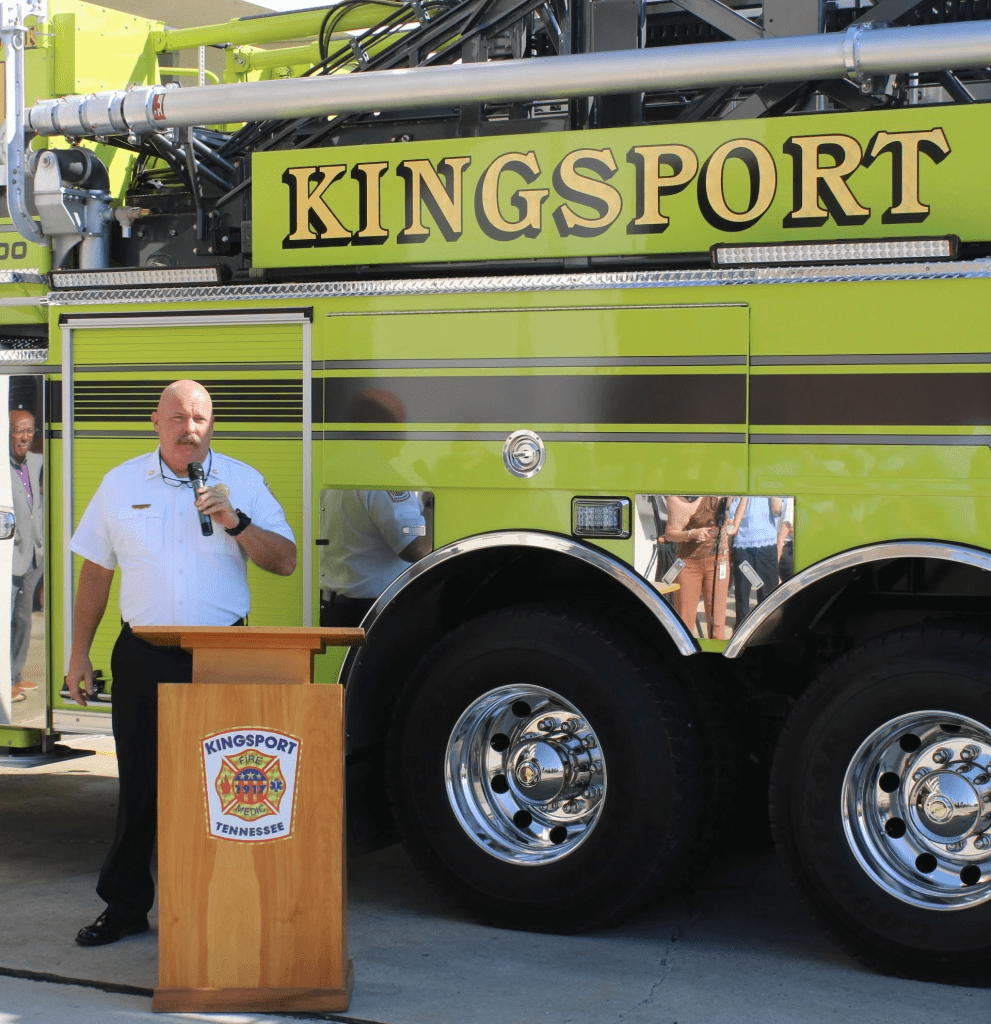
So the more relevant question may be: What happens if I have a heart attack, stroke, serious fall, or wreck? Who’s coming when I call 9-1-1—and how quickly? What are my chances afterward?
I still think about that when people considering a move to Kingsport ask why they should live inside the city rather than farther out, perhaps with acreage, a mountain view, or a place on the lake.
We all value independence and self-reliance—until an emergency reminds us how quickly we may depend on someone else.
I once met a Florida family who relocated to their dream home on a lake in a neighboring county. On move-in day, the husband suffered a cardiac event.
His wife called 9-1-1. Panicked, surrounded by boxes and knowing no one nearby, she asked, “We just moved here. We don’t know anybody. Can you stay on the line with me?”
Eventually, the call had to end. She later told me something I have never forgotten: you don’t know how empty you can feel until your lifeline is cut off.
The response took about 45 minutes one way. It took more than two hours to reach the emergency room. Her husband survived, thankfully, but the experience so traumatized them that they eventually sold the home and moved.
Kingsport’s latest numbers caught my attention. KFD’s average response time last year was 8 minutes, 39 seconds—nearly a minute faster than the year before. Its 118 personnel operate from eight stations across the city.
And KFD is not working alone. Sullivan County EMS serves Kingsport residents and provides ambulance transportation when needed. KFD can begin assessment, treatment, and stabilization while Sullivan County EMS responds simultaneously.
That isn’t unnecessary duplication. It is a layered response.
Kingsport residents are also county residents and taxpayers. It makes sense for those resources to work together. What matters in an emergency is that help is already moving toward you.
Minutes can affect survival and what comes afterward—brain function, mobility, independence, and whether someone returns home to the life they knew before the emergency. That makes response time a quality-of-life issue.
There is another reason for confidence. The Kingsport Fire Department is internationally accredited—by choice. KFD just returned from Chicago with its sixth reaccreditation, a recognition shared by only 1.1% of U.S. fire departments. Only six agencies in Tennessee are accredited, three in our own Tri-Cities.
KFD is not simply measuring itself against a state minimum or departments nearby. It voluntarily undergoes rigorous self-assessment, outside peer review and continuing evaluation through an internationally recognized model of professional excellence.
The question isn’t simply, “Do we meet the minimum?” It is, “How do we measure ourselves against the best practices of the profession, and how can we keep getting better?”
That commitment is reflected in more than 30,000 hours of training completed last year.
Most of us hope we never need any of it.
A lake view is wonderful. So is acreage, privacy, or a mountain view. But when the unexpected happens, there is considerable peace of mind in knowing who is coming when you call 9-1-1—and that they are only moments away.


Leave a Reply