Seventh in a 12-part monthly series to commemorate Sullivan County’s role in the 250th birthday of the United States of America
July 2026 | 7 of 12
Victory in the Revolutionary War did not bring immediate clarity to the frontier. In the Holston Valley, the early postwar years exposed a widening gap between rapid settlement and the ability of distant institutions to keep pace. Independence had been secured, but questions of ownership, authority, and representation remained unsettled.
By the early 1780s, Sullivan County and its neighbors were straining under growth. New arrivals continued to claim land. Boundaries overlapped. Surveys conflicted. Local courts could settle routine cases, but larger questions often exceeded their reach. North Carolina remained responsible for its western counties, yet its political center at New Bern was hundreds of difficult miles away. Communication was slow, and in periods of crisis, often ineffective.
Western settlers were expected to defend themselves, maintain order, and absorb continued migration while waiting for decisions from officials with little direct knowledge of frontier conditions. That distance created a growing sense that eastern leaders did not fully understand the burdens carried by communities beyond the mountains.
That frustration was sharpened by recent experience. At Kings Mountain, Overmountain communities had already demonstrated their ability to organize without waiting for distant direction. The victory strengthened their belief that people capable of defending the Patriot cause were also capable of shaping their own civil institutions.
The problem became more urgent after North Carolina initially moved to transfer its western lands to the national government. In 1784, the legislature authorized a cession, then reversed course. Western residents were left uncertain about who governed them and whether North Carolina intended to retain responsibility for the region.
Their answer was the proposed State of Franklin.
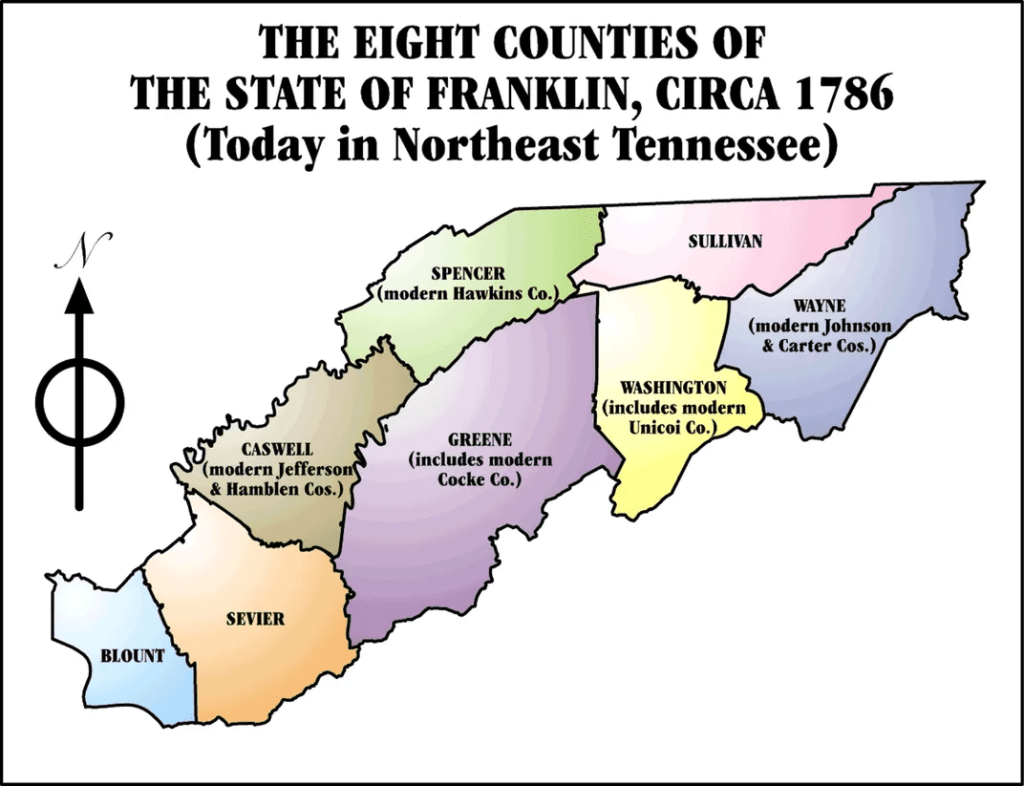
Delegates from the western counties created a government closer to the people it served. They established offices, organized courts, elected John Sevier as governor, and sought admission as a state. Franklin was not simply a rejection of North Carolina. It grew from a practical concern: the government needed to be close enough to function.
Franklin never gained the recognition required for statehood. Congress declined to admit it, North Carolina reasserted control, and divided loyalties weakened the movement. For several years, competing officials and legal systems operated in the same territory, deepening the uncertainty that residents had hoped to solve.
By the end of the decade, Franklin had collapsed, but the issues behind it remained. Its failure showed that local initiative alone could not provide lasting legitimacy. North Carolina was too distant to manage the region effectively, while an unrecognized state lacked the authority needed to secure its position.
The United States Constitution created a broader solution. The new federal government possessed powers the Articles of Confederation had lacked, including a stronger ability to administer territories and guide them toward statehood.
North Carolina made its final cession of the western lands on December 22, 1789. Congress accepted the transfer in April 1790 and organized the Territory South of the River Ohio on May 26. Territorial status did not erase local habits of self-government. It connected them to a recognized national framework with clearer authority and a defined path toward statehood.
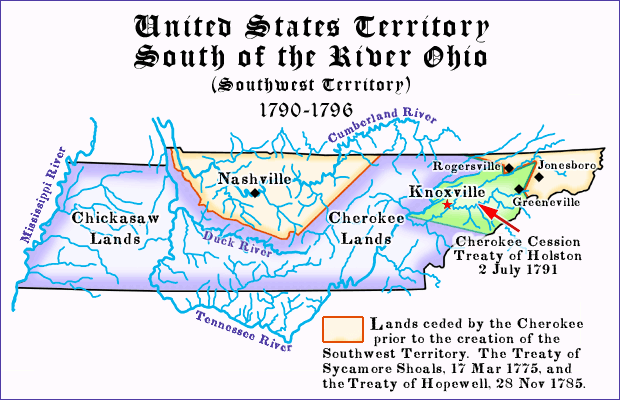
Administering that new system would fall to William Blount.
As our nation approaches its 250th anniversary, this chapter offers a useful reminder: independence required more than military victory. The Overmountain communities had proved their resolve in war and then insisted on a government that could meet the realities of peace.
Next in the series: August 2026 | 8 of 12 — William Blount and the Business of Building a Territory


Leave a Reply