Some of my fondest childhood memories revolve around Kingsport’s Independence Day parade. We lived one block from the parade route. I remember the rush of anticipation when the American flags started going up on the light poles. By dawn’s early light on the Fourth of July, I was as excited as a kid on Christmas morning. I couldn’t wait to get to my spot.
I was raised by a World War II veteran who was raised by a World War I veteran. My brother and I were never drafted, nor did we serve. For my children and grandchildren, war is something they’ve never had to face and, frankly, don’t understand in the same way I do. With each new generation, direct knowledge of the personal sacrifices fades—sacrifices that made our lives today possible.
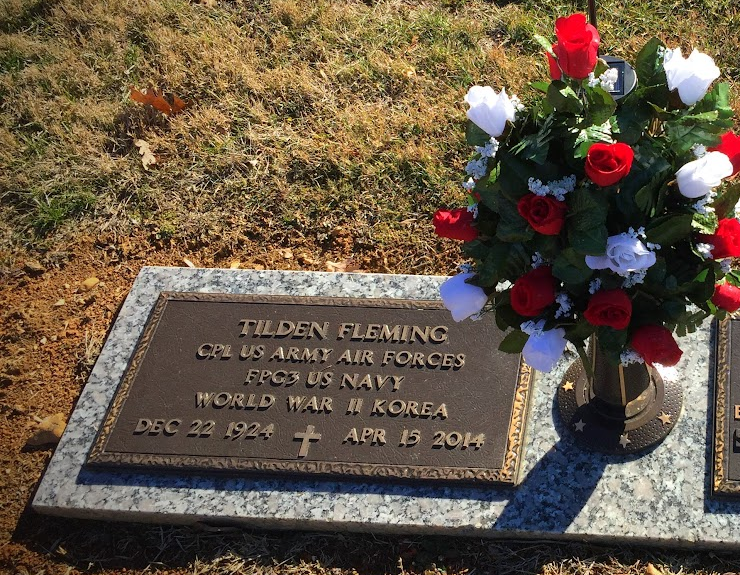
I vividly remember the expression on my dad’s face when they played the Army, Navy, and Air Force songs. He stood for all three. He was in the Army/Air Force before the two separated, and later in the Naval Reserve during Korea. I was young, so it affected me profoundly when my strong, tall dad stood, tightened his aging body as much as he could, saluted, and fought back tears. I could feel the emotion even as a little kid.
Why did my dad react that way? What had he seen? Why didn’t he like to talk about the “Greatest Generation” I learned about in history class?
At 18 years old, he left everything familiar to board a troop train bound for Norfolk and eventually joined the 455th Bombardment Group at San Giovanni Airfield, Cerignola, Italy, near Foggia. He maintained the planes. Every morning, a group would take off, but some would not return. All he knew was his task. He didn’t know the big picture and was never told.
After his death, I toured the National World War II Museum in New Orleans while my daughter was interviewing at LSU Dental School—with a keen sense that neither she nor I would have had that opportunity had he not survived.
There before my eyes was an exhibit explaining the role of his group. I wanted so badly to call him and say, “I now know what you saw,” but I couldn’t.
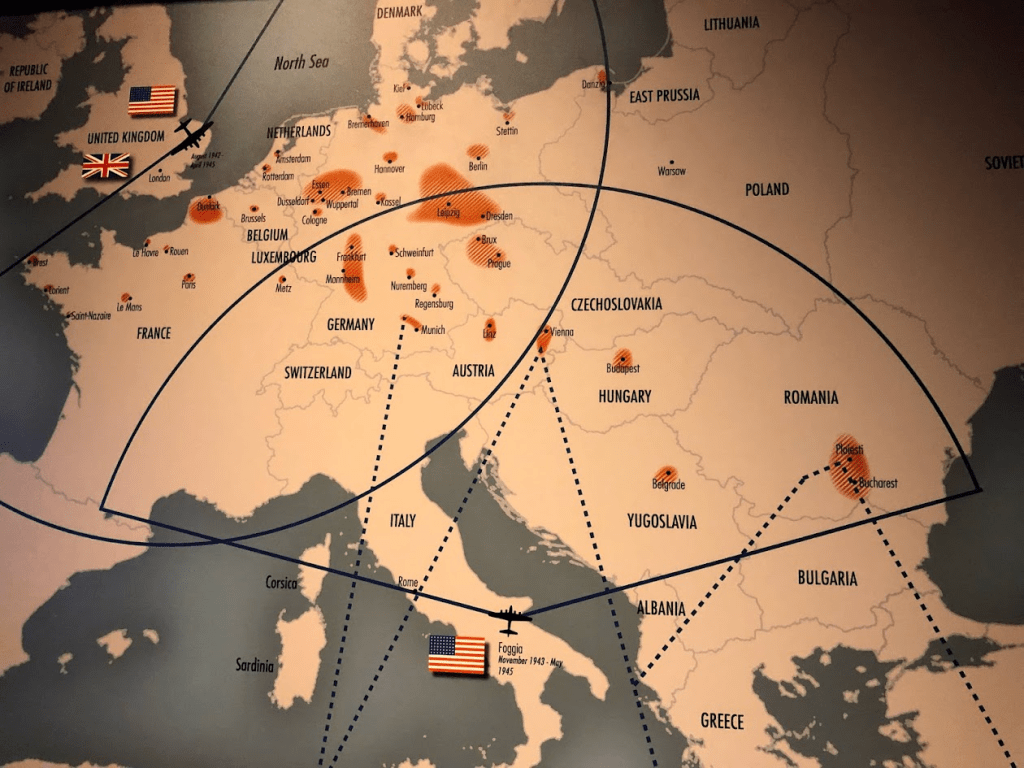
During its 15 months of combat, the 455th Bomb Group lost one man in every 27—young men who never had the chance to have children, grandchildren, or great-grandchildren as my dad did.
The exhibit told the story of a rough, hastily constructed base in southern Italy. The mission was to disrupt Germany’s fuel supplies, transportation systems, and war production.
The reason? To create a second front and soften German defenses in preparation for D-Day.
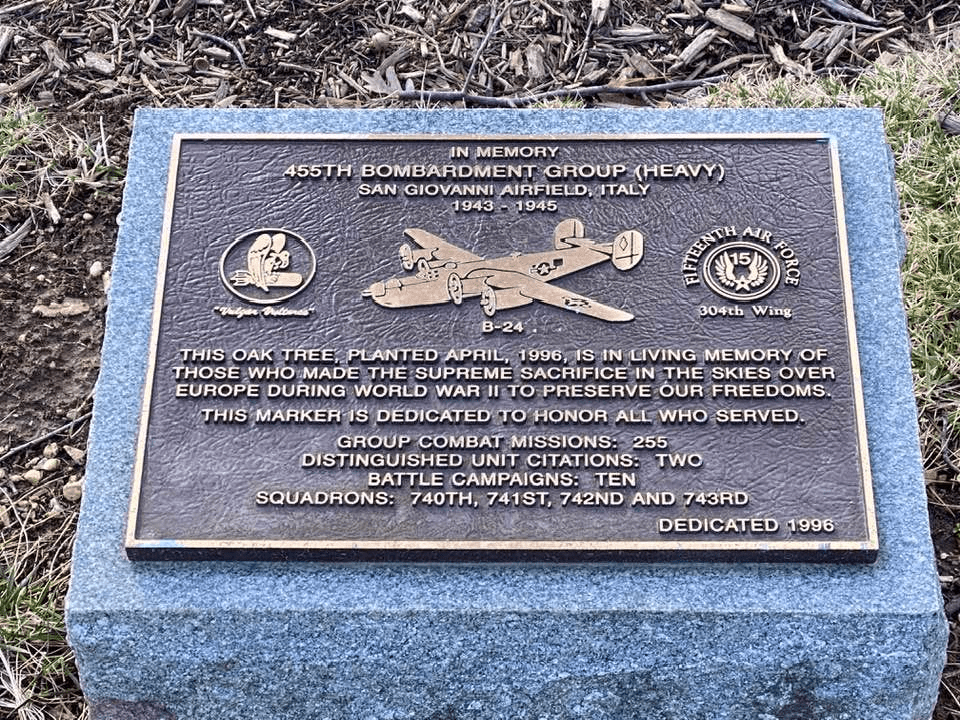
I’ve often contemplated—but can’t fully comprehend—the fear and anxiety he must have felt, wondering if he would be the next to die. I’ve never had to experience that, nor have my own son or daughter, because he stood in our place.
I remember him taking me to see the movie “Patton” in 1970. I was 9 years old. He was so proud to tell me that George C. Scott, the actor who portrayed General Patton, was also from Southwest Virginia.
And he said, “Son, never forget.”
And I haven’t.
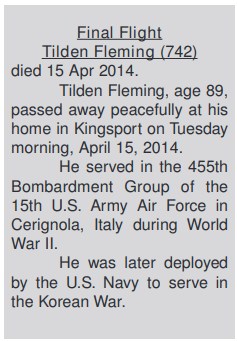
He didn’t see himself as part of “the Greatest Generation.” He saw it as what he had to do, assuming any generation would rise to the occasion if needed. But he never missed a reunion of his bomb group. While some had their final flight in 1943, his came in 2014 at age 89. Together, they remembered until there were no more left.
I’m so glad I got to take him to see the World War II Memorial in Washington, D.C., while he was still alive and experience it as a family—a family that may never have existed.
When Kingsport’s American flags became faded and tattered, the American Legion had run out of money to replace them. I jumped on it and asked for donations from the community. It was the least I could do.
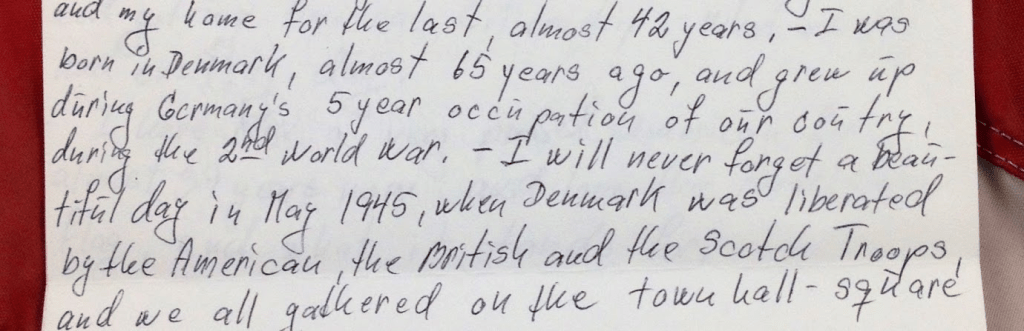
I received a donation and a note from Hanne Sobel, wife of the legendary Norman Sobel. They were Jewish residents of Kingsport. They remembered the Holocaust, but each year there are fewer and fewer survivors.
She penned a note: “I will never forget a beautiful day in May 1945, when Denmark was liberated by the Americans, the British, and the Scotch Troops, and we all gathered on the town hall square.”
We, too, must never forget.
I recently saw a poll reporting that a shockingly high number of Americans see the word “patriot” and the flying of the American flag as triggering or polarizing.
How did we get here?
The poll numbers are usually presented as evidence of national decline, political division, or fading confidence in our country.
There is truth in some of that concern. We are polarized. We argue too often and listen too little. The word “patriot” itself has sometimes been claimed by one side or used as an accusation against the other.
But patriotism does not belong to a political party, a candidate, or an ideology. It belongs to all of us.
Patriotism is not the belief that America has always been perfect. The language is “to form a more perfect Union.” It is gratitude for a nation that has repeatedly tried to become better. It is respect for those who served, sacrificed, built, taught, healed, protected, and worked so future generations could inherit more opportunity than they had.
It is also a responsibility. Loving a country means caring enough to improve it, defend its principles, participate in its civic life, and treat fellow citizens as neighbors even when we disagree.
That spirit will be on full display in Kingsport in the coming weeks.
At Liberty Celebration, nearly 200 local volunteers will take the stage at the Toy F. Reid Eastman Employee Center auditorium. They will act, dance, sing in a 150-voice choir, and play in a concert orchestra. These are not distant celebrities or professional touring performers. They are our neighbors, friends, coworkers, students, retirees, and family members, giving their time and talent to tell an American story.
A ticket costs only $5. That is less than many of us spend without thinking on a cup of coffee or a quick snack. In return, we get something increasingly rare: a room full of people gathered not to argue about America, but to celebrate it together.
Liberty Celebration will help launch Kingsport’s Independence Day season as an official Pre-Fun Fest event. Soon afterward, families will line the parade route in lawn chairs, children will wave flags, veterans will receive the recognition they deserve, and downtown will fill for Red, White & Boom, music, food, and fireworks.
Each event is different, but together they make a statement: Kingsport still knows how to gather as a community.
For 250 years, the American experiment has survived war, depression, bitter elections, social upheaval, injustice, reform, tragedy, and change. It has survived because each generation chose, in its own imperfect way, to keep the country moving forward.
That does not happen automatically. A republic depends on citizens who participate, vote, volunteer, serve, learn its history, honor its institutions, and refuse to let disagreement become hatred.
Patriotism can be quiet. It can look like placing a flag on a veteran’s grave, teaching a child the Pledge of Allegiance, serving on a local board, helping a neighbor, supporting a community event, or simply standing respectfully when the national anthem is played.
It can also be joyful.
It can sound like a choir and orchestra at Liberty Celebration. It can look like a lawn chair beside a parade route. It can feel like thousands of people singing together beneath the fireworks downtown.
So yes, patriotism is still OK. More than that, it is still necessary.
Pay the five dollars. Attend Liberty Celebration. Sit curbside for the parade. Come downtown for Red, White & Boom. Bring your children and grandchildren.
Let us celebrate not because America is perfect, but because it is ours—and because its future still depends on what we choose to do together.


 Kingsport Spirit
Leave a comment