Sixth in a 12-part monthly series to commemorate Sullivan County’s role in the 250th birthday of the United States of America
June 2026 | 6 of 12
By 1780, the Revolutionary War had reached the frontier in force. For the Overmountain settlements, the struggle shifted from simply holding on to taking action.
The implications went far beyond the backcountry. A Patriot victory in the South helped secure American independence and reshaped global power. Although frontier communities initially organized to protect their homes, their actions helped determine whether the American experiment would endure—and whether its example would carry beyond its borders.
That fall, militia units gathered to confront a growing threat. British Major Patrick Ferguson had pushed into the Carolina backcountry, warning frontier leaders that resistance would be crushed and settlements destroyed. His mission was to secure the interior, rally Loyalist support, and protect Cornwallis’s larger campaign in the South.
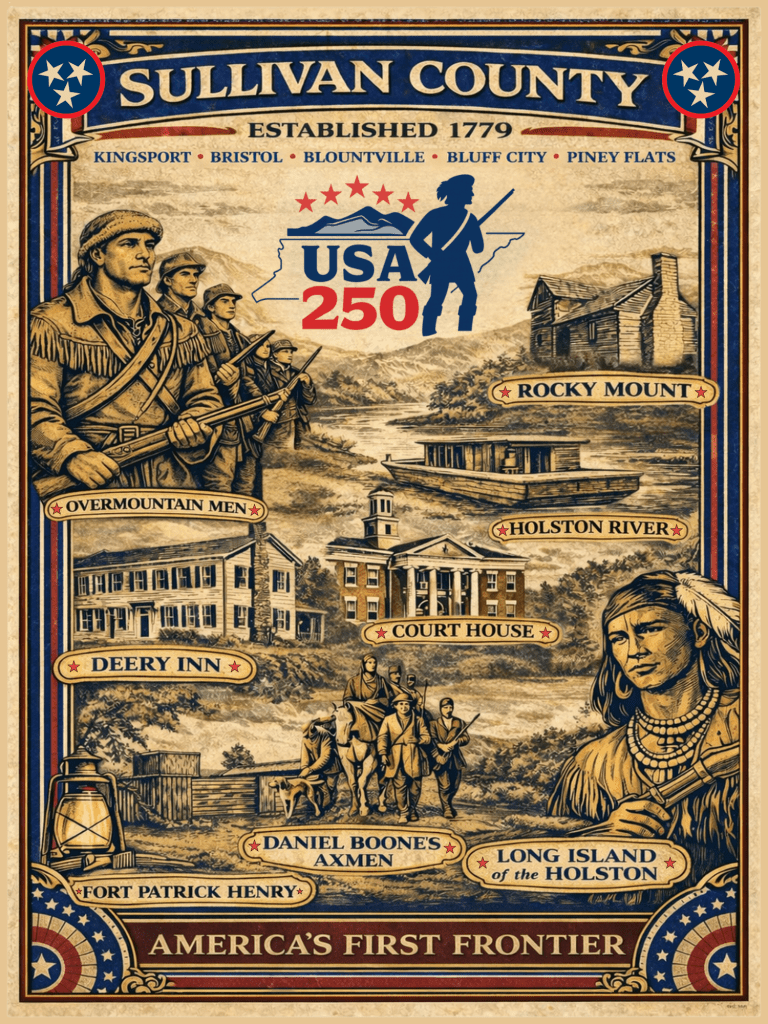
Many of these frontier families were Scots-Irish Presbyterians, shaped by older conflicts carried across the Atlantic. In Ulster, they had often lived as outsiders under an English political and religious establishment that treated them as second-class subjects. They came to the backcountry seeking a fresh start, but Ferguson’s threat turned old memory into immediate resolve. These men—later known as the Overmountain Men—organized and supplied themselves, then moved with urgency born of necessity.
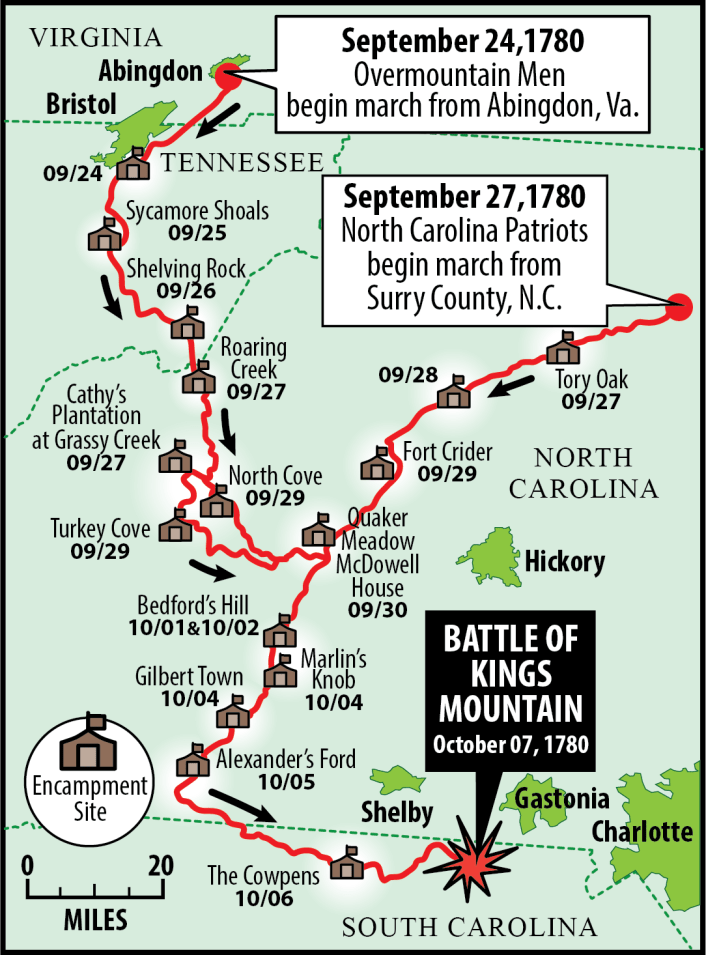
The Overmountain force came from a chain of frontier settlements along the Watauga, Holston, and Nolichucky rivers. John Sevier brought men from Washington County, then North Carolina, including the Watauga and Nolichucky settlements. Isaac Shelby brought men from Sullivan County, then North Carolina. William Campbell brought a large force from Washington County, Virginia. Keep in mind these counties were much larger than modern boundaries and covered broad stretches of the frontier.
Sullivan County served as a key corridor, linking gathering points such as Shelby’s Fort at Sapling Grove in present-day Bristol, the Pemberton Oak near Bristol, and Choate’s Ford near present-day Bluff City, where men crossed the Holston on their way to the larger muster at Sycamore Shoals on the Watauga River in modern Elizabethton.
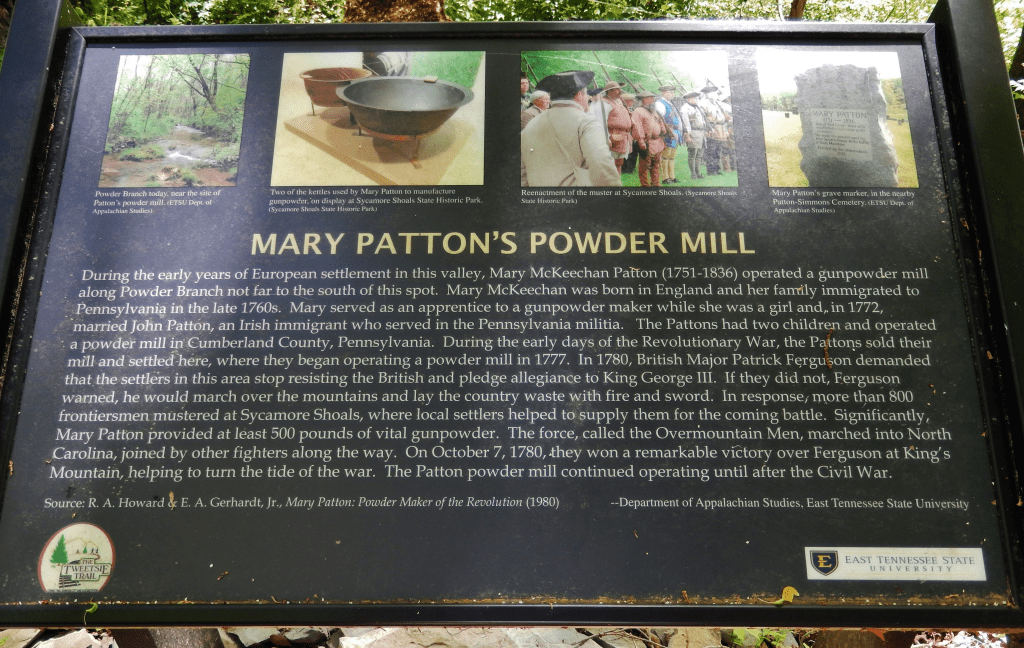
The story was never only about the men who marched. Women held frontier communities together while the militia was away, managing homes, farms, children, food, and livestock in a dangerous season. Some also made direct contributions. Mary McKeehan Patton, a skilled powder maker, is credited with providing more than 500 pounds of gunpowder. Without powder, rifles were only symbols.
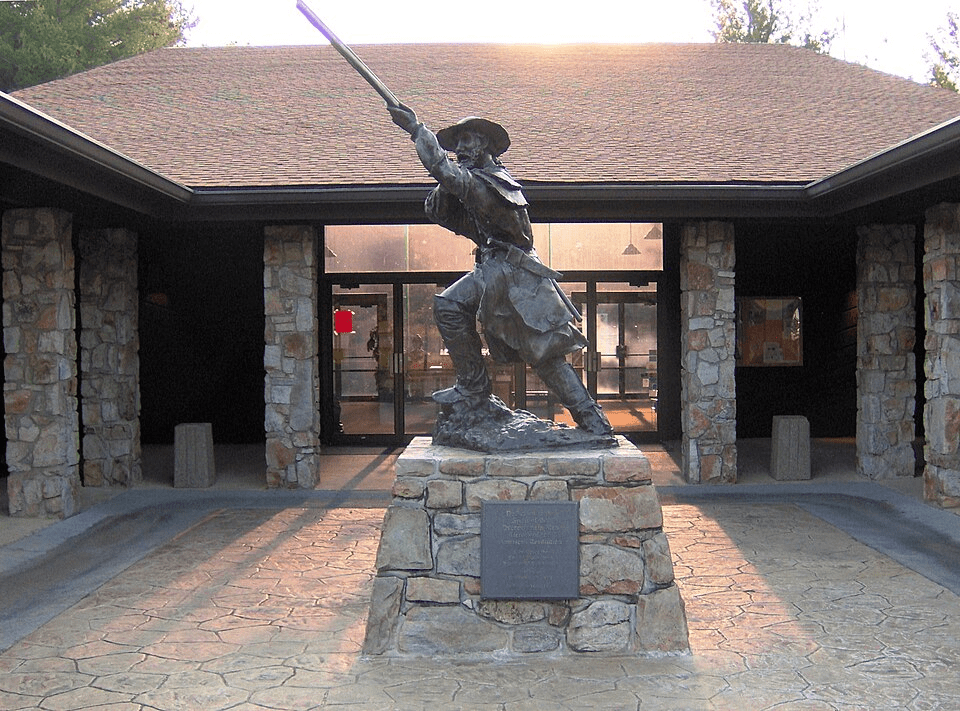
The Overmountain Men were not professional soldiers. They were pioneers, farmers, and patriots—many already hardened by frontier violence. They carried their own weapons and provisions, united by a common cause rather than formal command. Their strength lay in their knowledge of the land and a clear understanding of what was at stake for their families.
The militia moved quickly south and east, gathering additional forces along the way. On October 7, 1780, they surrounded and defeated Ferguson’s Loyalist force at Kings Mountain, South Carolina. The battle was brief, fierce, and decisive. Ferguson was killed, and his command was destroyed.
The consequences were immediate and lasting. Kings Mountain shattered British plans to control the southern interior. It forced Cornwallis to pause and reposition, disrupted the British southern strategy, and restored Patriot confidence at a critical moment. It proved that organized citizen-soldiers could defeat a well-led Loyalist force operating under British command. Thomas Jefferson later called it “the turn of the tide of success,” leading toward Cornwallis’s surrender at Yorktown just over a year later.
The three principal frontier leaders followed different paths after Kings Mountain. Sevier became Tennessee’s first governor. Shelby became Kentucky’s first governor. Campbell, who led the large Virginia force, died of illness in August 1781, just weeks before Cornwallis’ surrender.
As America approaches its 250th anniversary, the Overmountain story deserves fuller recognition. Independence did not advance only through declarations, diplomacy, and famous names. It also depended on backcountry communities whose determination—men who marched, women who sustained them, and families who risked everything—changed history. Their old-world memory, frontier grit, and “never again” mentality helped preserve the American experiment when its future was still very much in doubt.
Next in the series: July 2026 | 7 of 12 — A Federal Answer: The Territory South of the River Ohio


Leave a Reply