I was recently asked why half of the four church buildings on Kingsport’s historic Church Circle are Methodist. As a history buff, I knew why, but it occurred to me that others may not.
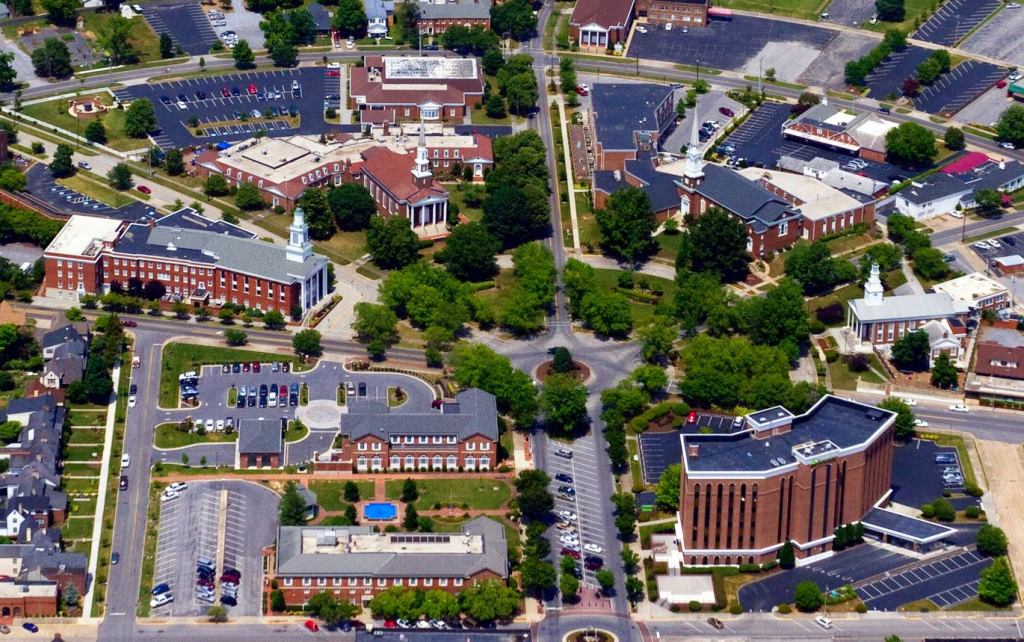
Long before Kingsport became the Model City, Methodist worship had already taken root here. Organized Methodism in this region dates to 1783—more than a decade before Tennessee became a state—when Jeremiah Lambert was appointed to the Holston Circuit. This broad field included settlements along the Holston, Watauga, and Nolichucky rivers, including present-day Sullivan County. That was the age of circuit riders, scattered preaching places, and congregations forming before there were formal towns or established institutions.
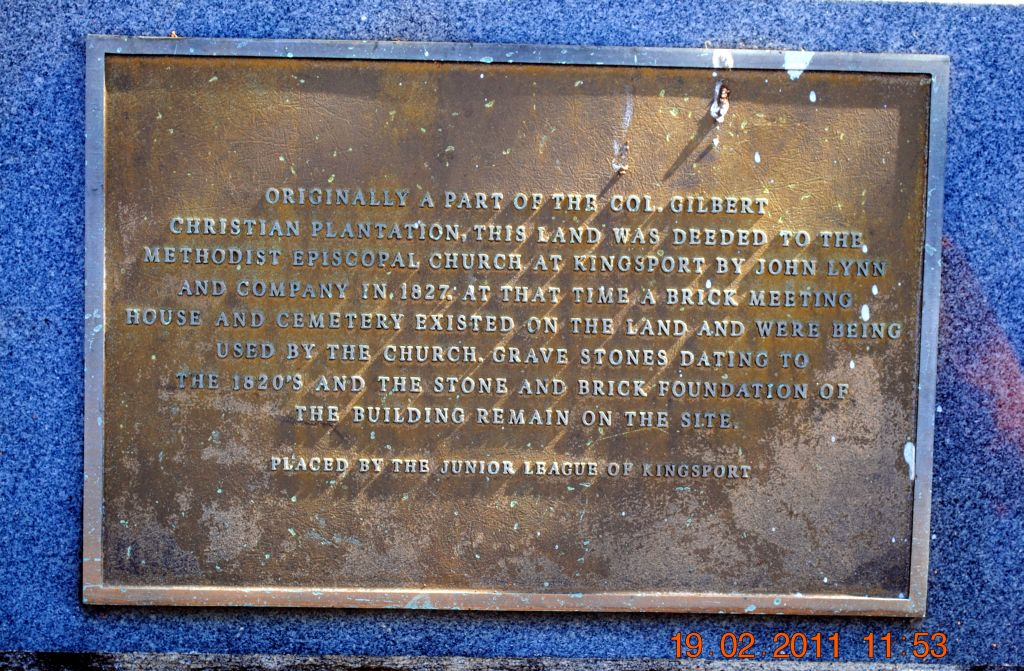
The clearest surviving evidence of that early presence is the old Boat Yard Methodist Cemetery and church site. A historic marker states that the land was deeded to the Methodist Episcopal Church at Kingsport in 1827, and that a brick meeting house and cemetery already existed there, with gravestones dating to 1821 — nearly a century before modern Kingsport.
The Boat Yard Methodist Episcopal Church Cemetery tells the story of Kingsport before Kingsport was Kingsport. Among the 67 memorials in this small burial ground are people born as early as 1753, decades before Tennessee became a state, and deaths extending to 1933, carrying the story from the colonial frontier into the modern era. The cemetery is anchored by the Lynn family (think Lynn Garden), whose name appears far more than any other, but it also reflects a web of connected families who helped shape the early community. Names that are readily recognizable to genealogists and historians. Names like Clyce, Davault/Devault, Netherland, Rhea, Gaines, O’Brien, Goodson, Anderson, and Woods.
Just as striking is the age pattern: more than a third of those buried there died before age 18, a sobering reminder of how fragile life once was, while a handful lived into their 70s and 80s, spanning extraordinary periods of history. In one small churchyard, you can see the story of this region itself—from the Revolutionary and pre-statehood frontier, through the Civil War generation, and into the years of World War I and the 1918 flu—a record of the families who endured, suffered, and helped build the early Kingsport community.
As Methodism matured across East Tennessee and Southwest Virginia, it also built larger institutions. Emory & Henry was founded in 1836 by the Holston Conference of the Methodist Episcopal Church, with students enrolling in 1838. The university identifies Tobias Smyth and the Reverend Creed Fulton among its principal founders. That connection matters because it shows how the same movement that planted congregations in places like the Boat Yard eventually founded schools, trained leaders, and helped shape the civic culture of the region.
But Methodism, like the nation itself, did not remain united. The split between northern and southern Methodists came before the Civil War, as the unresolved national conflict over slavery reached deep into the church. The flashpoint was Bishop James O. Andrew of Georgia, who had become a slaveholder through marriage and inheritance. When the General Conference voted that he should step back from active leadership while he remained a slaveholder, the larger sectional tensions could no longer be contained. What followed was a formal division between northern and southern Methodists—one more example of how the country’s deepest moral and political conflicts were already reshaping its institutions before the first shots of the war were fired.
When modern Kingsport was being planned and built in the 1910s, Southern Methodists with roots in the old Boat Yard community moved into the center of the new city. According to the Archives of the City of Kingsport, members of the Boat Yard Methodist Episcopal Church, South, including Mr. and Mrs. J. W. Dobyns, helped launch plans for a new downtown church, and Broad Street Methodist Church formally opened on January 28, 1917.
So Broad Street Methodist Church was new only in one sense: it was a new building on Church Circle. It carried an older faith community from the river settlement into the civic heart of the Model City. Then, in the early 1920s, the archives say the “Northern” Methodists built First Methodist Church across the street. For years, the two congregations faced one another across Church Circle, one descended from the southern branch of Methodism and the other from the northern branch.
Then came the reunion. Nationally, the northern and southern Methodist branches, along with the Methodist Protestant Church, reunited in 1939 as The Methodist Church. In 1968, that body became part of The United Methodist Church. Locally, Kingsport reflected that same reunion when the two downtown congregations merged in 1969 to become First Broad Street United Methodist Church (Archives of the City of Kingsport, 2013).
So that’s why First Broad Street United Methodist Church—the church with the unusual name—makes perfect sense when you understand the shared history of the congregation. What sounds unusual at first is actually a quiet record of reunion: First from First Methodist, Broad Street from Broad Street Methodist, and United from the coming together of northern and southern Methodist traditions.
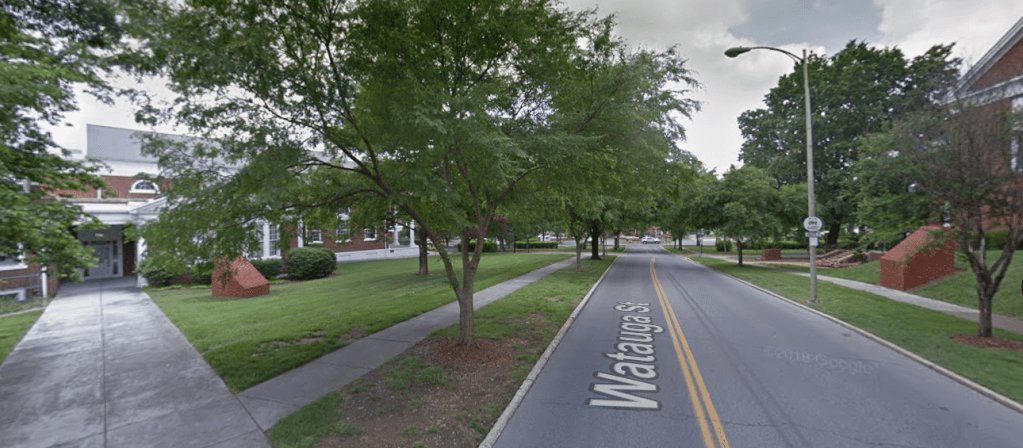
Today, the former First Methodist Church building is known as the Woodyard Center. Connected by a tunnel under Watauga Street, it now serves as a dedicated hub for community outreach and early childhood education. It houses a licensed, secure child care center with specialized classrooms, an indoor gymnasium, and a private playground for infants through preschoolers. It also serves as a mission center for the Friendship Diner, where free community breakfasts are offered to combat food insecurity.
And now you know.
References
The United Methodist Church, n.d.; General Commission on Archives and History, n.d.
Archives of the City of Kingsport. (2013, November 12). First Broad Street United Methodist Church history collection, 1949–1987. Kingsport Public Library.
Emory & Henry University. (n.d.). History.
Holston Conference. (n.d.). Timeline of Holston.
Sullivan County TN Genealogy. (2012, May 21). Boat Yard Cemetery.


Leave a Reply