Fourth in a 12-part monthly series to commemorate Sullivan County’s role in the 250th birthday of the United States of America
April 2026 | 4 of 12
Even as violence flared in the Holston Valley during the Revolutionary era, settlers made a choice that would shape the region’s long-term character: they insisted on order. Long before Sullivan County formally existed, settlers in the broader Overmountain settlements had organized courts, recorded land claims, and enforced basic rules. This civic order helped transform a contested frontier into a place capable of permanence.
The roots of this instinct lie as much in migration patterns as in ideology. Many of these settlers were part of the long migration stream that began on the Philadelphia Wagon Road, moving German and Scots-Irish families south through the Shenandoah Valley before turning west. By the time they reached the Holston Valley, they were not seeking temporary refuge. They intended to clear land, raise families, worship openly, and settle permanently.
Still others entered from Sycamore Shoals (modern Elizabethton), following paths that interconnected the Carolina backcountry. These routes carried settlers who had already lived under organized systems of law east of the Blue Ridge, who expected the same in their new homes.
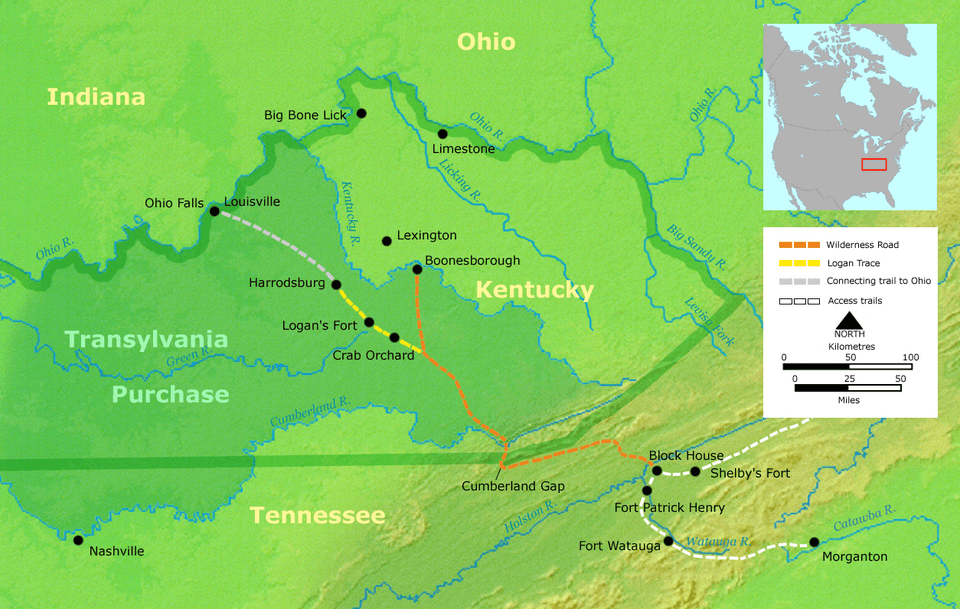
During the early and mid-1770s, settlers developed systems of governance to meet immediate needs. Courts convened to resolve disputes, register land claims, and impose order. Committees handled issues of security and cooperation. These arrangements were informal and often fragile, but they provided continuity at a time when formal colonial authority was distant, and war consumed attention elsewhere.
In 1776, this push for legitimacy took a decisive step. The Overmountain settlements—commonly described at the time as the Washington District or Watauga settlements—petitioned North Carolina for formal recognition. The petition sought validation for courts and land records already operating on the ground, not the creation of something new. Later that year, North Carolina extended recognition, bringing the region within an acknowledged legal framework.
This moment matters for the Holston Valley’s story. It shows that governance here was not imposed from outside but requested from within. Settlers had already demonstrated their willingness to govern themselves; they now sought legitimacy and continuity.
Geography reinforced these developments. Parts of the Holston Valley—especially the ‘North of Holston’ settlements in what is now Sullivan and Hawkins Counties —were long treated as if they belonged to Virginia until boundary questions and North Carolina’s western claims were clarified. There was never any dispute that settlements along the Watauga and Nolichucky were always part of Carolina. This helps explain why the older Watauga-Nolichucky settlements and the northern Holston settlements developed along somewhat different lines, eventually contributing to separate administrative organization in Washington and Sullivan Counties.
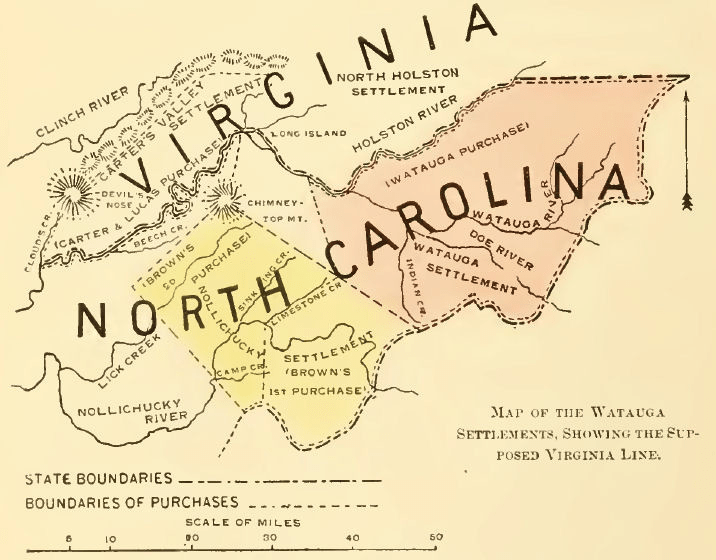
It also explains why interior farming communities that lie between the rivers (modern Piney Flats, for example) often proved to be practical locations for routine civil business. They were a strategic crossroads between the two counties where people could reliably gather.
What mattered was the habit of law: the expectation that disputes would be resolved through process rather than force. This emphasis on governance distinguished ours from many frontier regions. Even as families sought refuge in forts during moments of danger, they continued to insist on contracts, records, and rules. Defense and law developed side by side, reinforcing one another.
By the time Sullivan County was formally created in 1779, the habit of self-government was already well established. Courts did not suddenly appear with countyhood; they were formalized and strengthened because they already existed.
As America approaches its 250th anniversary, these early civic choices deserve recognition. Independence was not sustained by military action alone. In the Holston Valley, it was secured by a persistent belief that order mattered—and that a society worth defending was also worth governing.
Next in the series: May 2026 | 5 of 12 — The Holston River: From Long Island to the Future Capital


Leave a Reply