This week, community members gathered to cut the ribbon on the new BlueCross Healthy Place at Riverwalk Park. But ribbon-cutting is only the visible moment. It is the latest public expression of a vision that began decades ago.
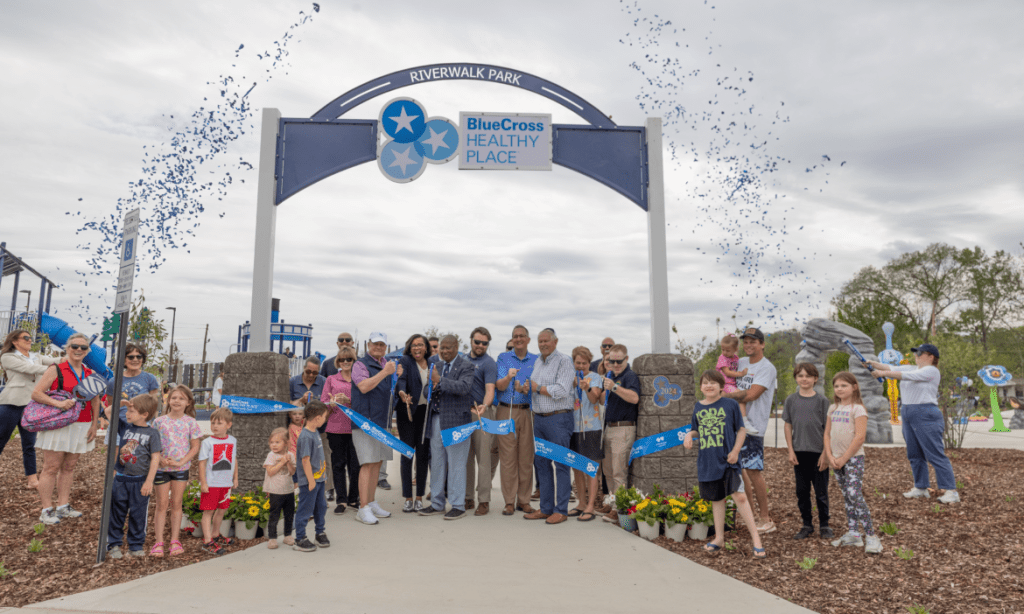
One thing stood out to me in the photo of dignitaries cutting the ribbon: City Manager Chris McCartt was not in it. And I knew that was intentional. Chris was the point person for this project circa 2007, and his fingerprints are all over it.
Instead of stepping into the limelight, he nudged current staff members to the front and stepped away, allowing them to feel the rush that comes with completing a project. In doing so, he gave them something more valuable than a place in a photograph. He gave them ownership, pride, and the hunger to do more.
That quiet gesture says a lot about character and leadership.
City managers understand something public life does not always reward: meaningful success is rarely built during one person’s tenure. Elected officials can be impatient. Community members can be impatient. All of us want visible results, and we want them now. But building a better town is not a sprint. It is a distance race. You pace yourself. You take small strides. You keep moving. Over time, those steady steps become something substantial.
Kingsport’s riverfront story proves the point.
In many ways, it reaches back at least to the 1976 American Bicentennial, when Riverfront Park and the Boatyard helped turn the community back toward the Holston River. The earliest Greenbelt segment grew out of that period, building momentum for the broader Greenbelt system that followed. During this America 250 year, that feels especially fitting. Few places connect Kingsport’s local story to the larger American story more naturally than the “port” in Kingsport, including the Netherland Inn and the Boatyard, where river travel, commerce, settlement, and westward movement once converged.
The story did not unfold seamlessly. Plans rarely do.
After the Bicentennial and into the early 1980s, there was the slower, quieter work of reinvestment in what was then called Old Kingsport. Aging housing stock needed attention before larger placemaking could take hold. The Greenbelt continued expanding along the river and Reedy Creek through the early 2000s.
Then, from 2004 to 2008, came the evolving plans of KOHO, or King’s Port on the Holston, along with Kingsport Landing and Riverwalk Park, all intended to reconnect Kingsport to the Holston through public spaces, heritage, access, and redevelopment. Then the Great Recession intervened, and like many good plans, the vision had to wait, adapt, and move forward in smaller steps.
Even the Netherland Inn roundabout matters. It was not just a traffic solution. It became part of a broader effort to make this historic corridor safer, more accessible, and more ready for public use. Land assembly and redevelopment efforts helped prepare the way.
The specific genesis of this week’s ribbon-cutting came on February 16, 2024, when the BlueCross BlueShield of Tennessee Foundation and the City of Kingsport announced a $7.8 million partnership for Riverwalk Park. Now open, the 8.8-acre park connected to the Greenbelt includes a kayak launch, splash pad, accessible play areas, pavilions, fitness features, pickleball courts, a basketball hoop wall, trails, and parking.
Good city-building works the same way. Each generation carries the baton for one leg of the race. It is a marathon, not a sprint. The more seamlessly the baton is handed off, the more momentum a community keeps. The person holding it on the final leg may be the one who crosses the finish line to a cheering crowd, but that moment is only possible because others carried it faithfully along the way.
The race never really ends. Our job is to run our leg well, not grow weary, and hand the baton cleanly to those who come next.
That is what Chris McCartt showed this week by leading from the back.


Leave a Reply