THE FULL STORY (THERE’S A CONDENSED VERSION, TOO)
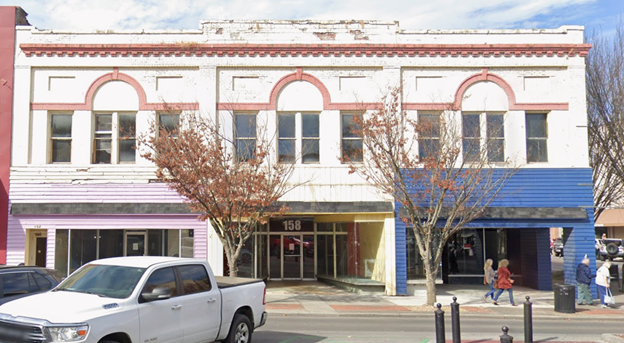
Perhaps you, like me, have been following the renovation of the Hicks Block Building at the corner of Broad and Market Streets in Downtown Kingsport. If you haven’t, I encourage you to go to Facebook and search “Hicks Block – Kingsport” and browse through the photographs.
Architect Kattie Stanton-Casebolt and husband, Eric, bought the building just in time to save it from an impending date with the wrecking ball. They’ve been pouring their heart, talent, and sweat equity into restoring it. I can’t wait to see the finished product!
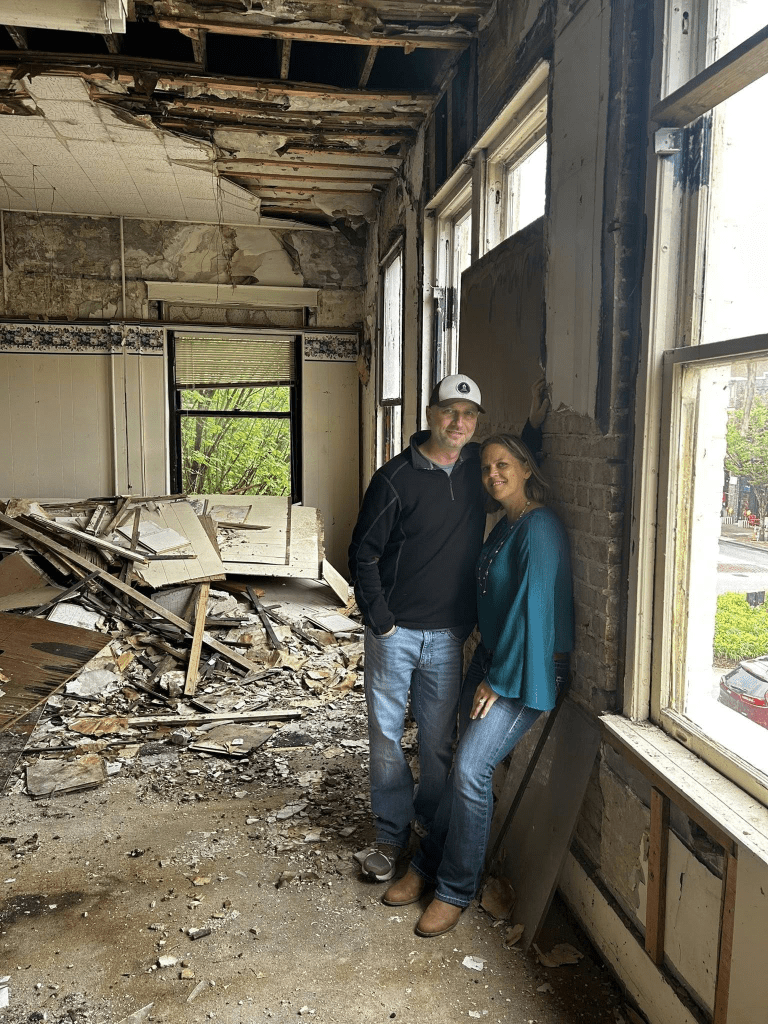
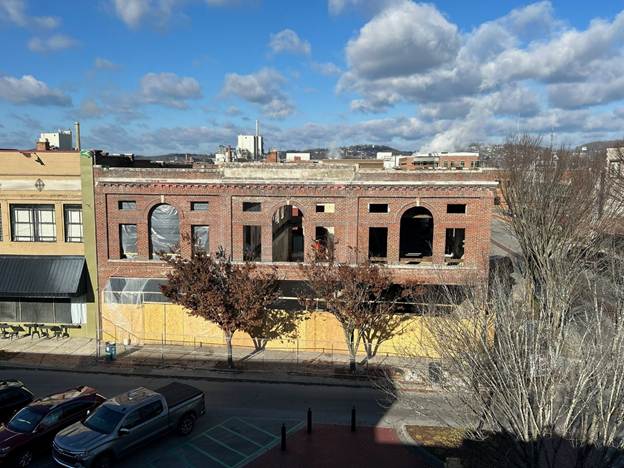
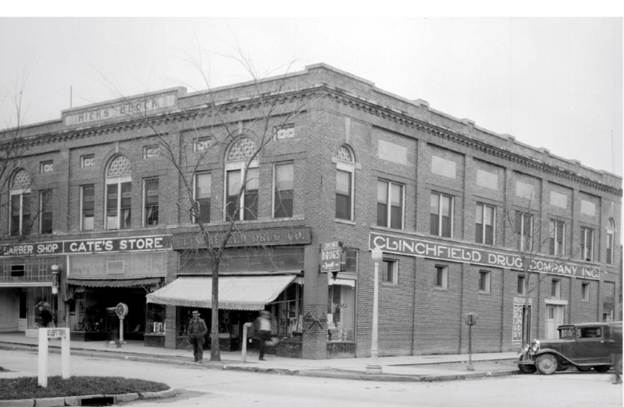
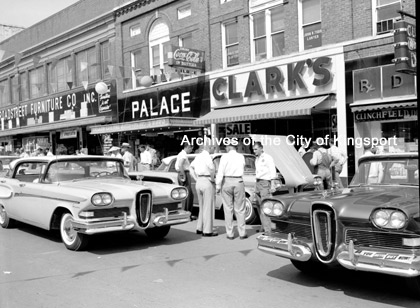
Many older residents know it as the site of the former Clinchfield Drug Company. The younger generation may remember it as the home of TK’s Big Dogs. It was also the first home of Palace Barber Shop, later Palace Fruit (predecessor to Palace Vending).
But who is Hicks? To my knowledge none of Kingsport’s early founders bore that name.
Like many of the earliest builders, he didn’t own businesses here. He saw an investment opportunity and built multi-purpose speculative spaces for lease or rent.
I started digging into his biography, and my oh my! What a story!
He was one of Bristol’s biggest boosters. When he invested in Kingsport, he was 89 years old. As you read along, you’ll understand why he recognized what was happening in Kingsport and wanted to get in on the action. He had done it before in Bristol, and other cities.
Dr. John Franklin Hicks
Born in 1827, Dr. John Franklin Hicks (widely known as Dr. J.F. Hicks) lived a life that spanned several distinct chapters of American history and carried them into one long, consequential public career.
He was born in the early republic, came of age when railroads were beginning to reshape the interior South, moved to Texas during that state’s great antebellum rise, lived through the Civil War and Reconstruction, spent time in Brazil in the unsettled aftermath of Confederate defeat, returned through Southwest Virginia, and ultimately made himself one of the most influential figures in old Bristol. By the time he died in 1920, he was remembered not only as a physician but as a property owner, city councilman, public financier, educational trustee, railroad advocate, and one of the men whose judgment helped guide Bristol through difficult years of growth.
He was 9 years old when the Alamo fell in 1836.
He was 18 when Texas became a state in 1845, sparking the Mexican American War.
He moved to Texas in 1856 when Andrew Johnson was governor of Tennessee (1853-1857).
West Tennessee Beginnings
Hicks’s tombstone at Bristol’s East Hill Cemetery places his birth on January 3, 1827. Obituaries identify his birthplace as Jackson, Tennessee, though one lifetime newspaper notice referred to Trenton, Tennessee, as the place of his birth, and another showed that he still had relatives in both places late in life. That uncertainty is not especially surprising. He belonged to the wider population of early West Tennessee, where kinship, migration, and county identity often overlapped. What is clear is that he emerged from the West Tennessee of the 1830s and 1840s, a region still marked by recent settlement, expanding transportation dreams, and a restless search for opportunity.
One of the earliest surviving glimpses of him already reveals something important about his character. In 1853, while still a young man in Madison County, he appeared in a railroad meeting at Denmark, Tennessee, where local citizens debated routes and connections that might shape the economic future of the region. In the mid-nineteenth century, railroads were among the most consequential forces in American development. They determined which towns would thrive, which farms would reach market, and which localities would become part of a larger commercial world. That Hicks was already visible in that setting foreshadowed a pattern that would repeat throughout his life: he was repeatedly drawn to the questions where transportation, growth, and public prosperity converged.
Marriage and Family
Later that same year, Hicks married in Madison County. His first wife was Sarah Winifred Harbert, born in 1836, who died in 1888. Their family line would become prominent in its own right. Their son, Dr. Thomas Howell Hicks, became one of Knoxville’s leading physicians. Their daughter, Trula Joyce Hicks, later married first Dr. William Alexander Read and, after his death, William H. Rouse, former mayor of Bristol, Virginia.
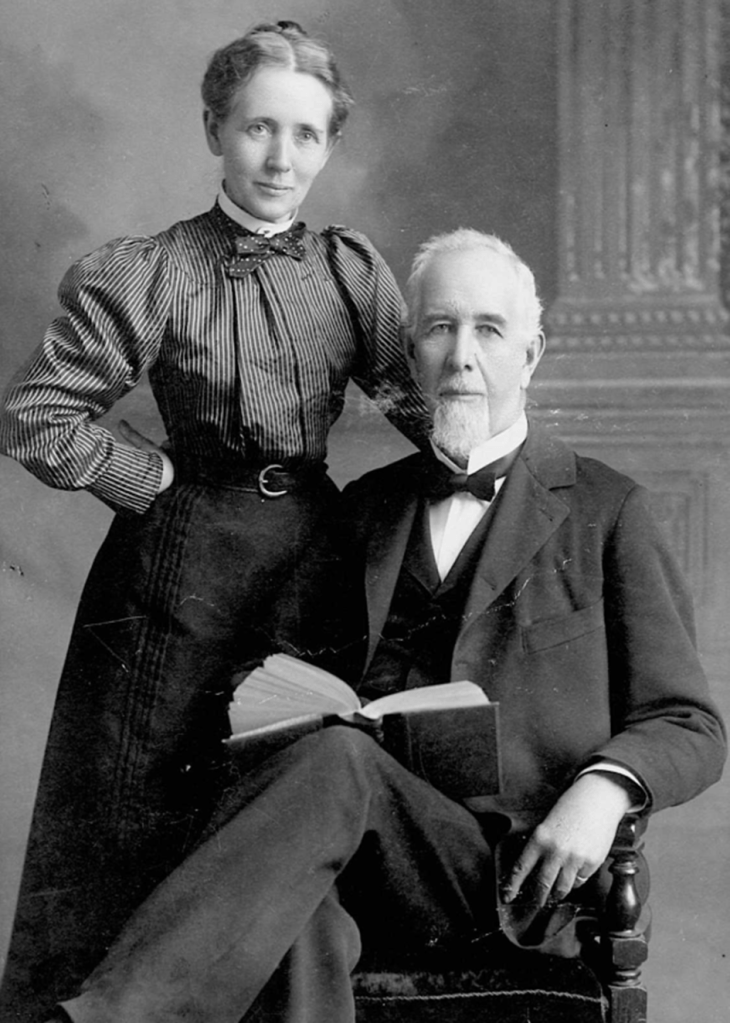
After Sarah Winifred’s death, Dr. Hicks married Mary Elizabeth McCormick, daughter of Robert McCormick and Katherine Renolds. She survived him by several years and became a notable civic figure in Bristol in her own right.
Why Texas Would Have Appealed to Him
By 1856, Hicks appears to have been in Colorado County, Texas, in the Columbus–Alleyton area. The move fits the great Southern migration pattern of the 1850s. To an ambitious young physician from West Tennessee, Texas would have seemed one of the most attractive destinations in the United States: a young state, rapidly growing, rich in land, and still socially open enough for talent and ambition to rise quickly.
He would have known about Texas through the same channels that carried so many Southerners westward in that era: family ties, letters, newspapers, migration chains, and the constant talk of opportunity. He went there not as a wanderer, but as a man intending to build a larger life.
Physician, Landholder, and Public Man in Texas
The Texas evidence shows that Hicks was not simply practicing medicine on a small scale. A Southern Methodist University research note identifies Dr. J. F. Hicks as a physician in Alleyton from roughly 1856 to 1868, and notes that a medical essay summarized his report on the diseases of Alleyton, suggesting real professional standing.
At the same time, Texas records indicate that he was more than a doctor. One clipping refers to “Dr. J. F. Hicks’ place” and to Mr. Trammell, the manager there, implying that Hicks maintained agricultural property substantial enough to require management. Even before Bristol, then, he was already combining medicine, landholding, and business.
He remained in Colorado County through the Civil War and into Reconstruction. In 1866, his name appeared on a public political statement issued from Columbus, Texas, endorsing a conservative delegate in the postwar political struggle. That places him directly inside the civic life of Reconstruction Texas, not on its margins. He was a man whose opinions and presence mattered enough to be publicly recorded.
The Brazil Chapter
Then came the most unusual turn in his story. In February 1869, the Galveston Daily News reported that Dr. J. F. Hicks and family, along with Frank Turner and family, had left Colorado County some weeks earlier “to seek homes, it is understood, in Brazil.” This was not a later family embellishment; it was a contemporary newspaper report.
Hicks’s move placed him within the little-known but historically important current of post-Civil-War Southern migration to Brazil, when some former Southerners looked abroad for renewed opportunity in the wake of Confederate defeat and emancipation. Later Bristol notices and obituaries confirmed that he had spent part of his life in South America, and one early Bristol medical notice said specifically that he had practiced in the Empire of Brazil. However long he remained there, the chapter was real and significant.
Return Through Tazewell, Virginia
The family eventually returned to the United States, and before Hicks came to Bristol, he passed through another important phase in Tazewell, Virginia. By 1873, he was already visible there, presiding over a railroad meeting—again showing the same instinct for public development that had marked him in Denmark and would later define him in Bristol.
His son Thomas’s obituary later made the sequence clear: born in Columbus, Texas, Thomas had lived in South America with his parents, then returned with them to the United States and on to Tazewell, where Dr. Hicks became known as one of the foremost physicians of that section. Only after that did he move to Bristol in 1874.
Arrival in Bristol
When Hicks arrived in Bristol, the city was still becoming itself. It occupied a strategic position on the Tennessee–Virginia line and had the air of a place with far more future than past. It needed doctors, builders, investors, and practical men willing to engage civic questions. Hicks proved to be all of those.
A Bristol notice from 1874 described him as a physician and surgeon of “rare and remarkable skill,” particularly in chronic diseases, and noted that he had practiced in Brazil and Baltimore. He entered Bristol not as an unknown provincial doctor, but as a man with a broad and unusual background.
Still a Physician
His medical identity remained central throughout his life. Even as he accumulated property and entered public office, he never ceased to be a physician in the eyes of his community. His obituary described him as a graduate in medicine and long prominent in medical circles throughout Virginia and Tennessee.
A 1901 newspaper clipping shows him performing a serious operation for a spinal abscess, making a deep incision along the spine to save a patient’s life. He was not merely a former doctor who had drifted into business. He continued practicing medicine at a high level even while his civic and financial influence grew.
A Builder of Bristol
Yet it was as a builder of Bristol that Hicks made his broadest mark. By the 1880s and 1890s, he had become one of the city’s important commercial property men.
In 1887, he proposed building a fine hotel on his lot on Fourth Street. In 1891, he and Dr. J. A. Dickey purchased a prime Main Street parcel in what the press called the largest Main Street property deal yet made in Bristol, paying $27,500. In the building boom of the late 1890s and early 1900s, his name recurs constantly: a two-story brick building on Fifth Street; a two-story brick addition to Huntsman Bros. & Co.’s wholesale house; a handsome building under construction on Fifth Street; a three-story brick-and-stone building on Main Street; a handsome two-story office building; a business house on Sixth Street; the purchase of one-half interest in additional valuable Main Street property; and a substantial State Street business house erected in 1900 and sold in 1909 to Col. S. L. King for $20,000.
Later still, in 1912, he sold a forty-foot business lot on Fourth Street, beside his residence, for $4,000, with the buyer expected to erect a new business building there. Taken together, these transactions show a man who was not merely collecting rents. He was actively building and shaping the commercial heart of Bristol.
City Council, Finance, and the Water Question
The public side of his career was equally important. Hicks served repeated terms on the Bristol City Council / board of aldermen. He was first elected in 1900, then later announced his resignation after ten years of service. The newspaper article credited him with introducing the economical methods by which the city’s affairs had been conducted and said he had won the “everlasting gratitude” of the people for it.
This was unusually strong public praise, and it clarifies his civic role. Hicks was remembered not as a colorful politician, but as a practical municipal steward whose judgment on public and financial questions was deeply trusted.
The water question in Bristol helps put that reputation into focus. In the 1904 aldermanic campaign, one of the chief issues was the city’s water supply and the most economical way to secure it. That was no small matter. The city depended on a series of wells, and many houses had no indoor plumbing. Waterborne illness from untreated well water was common.
By the early twentieth century, water systems were among the central tests of whether a growing city could become truly modern. Water meant public health, fire protection, sanitation, and industrial growth. Hicks was identified with the economy side of that debate, which fits perfectly with the broader evidence that he was one of Bristol’s chief practical financiers in public life. He represented the kind of civic leadership that tried to modernize without fiscal recklessness.
According to Bristol historian Bud Phillips, it was not until South Holston Dam was built that the city’s water source became fully secure.
Streets, Paving, and Visible City-Building
His role in public improvement was vividly embodied in the first paving-brick ceremony in August 1900. Contemporary notices show that Hicks spoke at the event and, as chairman of the Street Committee, laid the second ceremonial brick after Mayor John Anderson laid the first.
That image captures his importance perfectly. He was helping literally lay the streets of modern Bristol.
Board of Trade and Measuring Bristol’s Growth
His leadership also extended into organized commercial life. In 1898, he was appointed a delegate to the State Industrial Convention in Nashville. In 1904, he became president of the Bristol Board of Trade, and in 1905 he stepped down from that position.
In 1901, as chairman of the Statistics Committee, he presented a report claiming that Bristol’s business had increased fourfold in five years and that annual commerce could be conservatively estimated at $20 million. That detail matters because it shows Hicks not just building and investing, but also interpreting and advertising Bristol’s rise through the language of data, scale, and commercial confidence. He was one of the men telling Bristol what it was becoming.
“Push! That’s Bristol”
His visibility in Bristol’s public life was nowhere more vividly displayed than in 1910, when he stood at the center of the unveiling of the city’s famous illuminated sign.
Today the landmark is known for the phrase “Bristol, Va.-Tenn. A Good Place To Live,” but that was not its original message. When the Bristol Gas and Electric Company first presented the giant electric sign, it blazed with the slogan “Push! That’s Bristol.” Hicks gave the keynote address at the unveiling of the sign donated by the Bristol Gas and Electric Company, and used the occasion to praise Bristol’s progress, resources, and future. He pointed to the city’s strategic position, its climate, its surrounding iron, coal, timber, and fertile lands, and the expanding commercial life that he believed justified confidence in Bristol’s destiny.
The slogan suited him perfectly. Few men had done more to give Bristol its “push” than Hicks himself—through downtown investment, city finance, street improvements, railroad promotion, Board of Trade leadership, and long service in public affairs.
The sign’s later history also mirrors the larger civic transition that men like Hicks helped bring about. In 1915, it was moved to its present location over State Street. Then, in 1921, after a public contest, the original slogan was replaced with the phrase “Bristol, Va.-Tenn. A Good Place To Live.” The change reflected more than a new set of words. It marked a shift in civic tone. “Push! That’s Bristol” belonged to the era of raw boosterism, when Bristol was still loudly announcing its ambition and insisting on its future. “A Good Place To Live” suggested a city that had grown more settled and self-assured—less intent on proving itself, more ready to present itself as established, livable, and mature.
In that sense, the two slogans together tell a story, and Hicks stands near the center of it. He belonged to the generation that helped move Bristol from a town that needed to push into a city that could plausibly claim to be a good place to live.
Lifelong Railroad Instinct
The same energy shaped his commitment to railroads. The young man in the West Tennessee railroad meeting reappeared in Tazewell, Virginia, in 1873, in Bristol in the 1879 stockholders’ meeting of the N. G. R. R. Co., and again in 1915, when, despite advanced age, he became an advocate for the projected Carolina, Greenville and Northern electric rail line from Kingsport to Bristol. He called it an “opportunity of vast import” and served on the committee raising local funds to help secure it.
Over more than sixty years, the pattern hardly changed: Hicks instinctively recognized transportation as one of the foundations of civic prosperity.
Mining and Wider Regional Investment
His influence reached beyond Bristol into a wider regional economy. He appears among the owners involved in major zinc-property transactions at Fall Branch and Bloomingdale, where large tracts were sold to the Southern Zinc and Mining Company of New York. Other notices connect him to mineral-bearing lands in Southwest Virginia, including property associated with a substantial manganese vein.
He was no narrow town investor. He had the broader speculative range of a man who understood that the future of the upper South would be shaped not only by city lots, but by transportation, minerals, and industrial development.
Kingsport and the Hicks Block at 152–160 Broad Street
That same regional instinct carried him into Kingsport, where his role was more than incidental. At the advanced age of 89, he was reported as erecting a fine brick building in the business section of Kingsport, later letting a contract for another new business block, and appearing repeatedly in town on business.
The most revealing Kingsport property was the Hicks Block Building at 152–160 Broad Street, also associated in later memory with Clinchfield Drug at 160 Broad Street. Built by 1916, before Kingsport’s incorporation, it was one of the earliest substantial two-story mixed-use commercial blocks on that stretch of Broad Street, at a time when much of early activity still clustered nearer Main and Broad and Five Points. That meant Hicks was not just buying into a finished city. He was helping determine where downtown would extend.
What makes the Hicks Block especially important is its long, vivid life as a multi-tenant business space. It was never a single-purpose structure. From its earliest appearance, it functioned as a classic urban commercial block, with multiple ground-floor storefront bays and professional or institutional space above.
In 1916, one storefront was a pool hall while the others were still vacant, marking it as a pioneer building on a still-developing stretch of Broad Street. By 1919, one storefront was a grocery, the corner bay a bank, and the second floor a hospital. By 1925, the corner space held a drugstore.
Its later tenant history reads like a running social history of downtown Kingsport. Over the years the Hicks Block housed Kingsport Bank & Trust, later Interstate Trust & Savings Bank, Clinchfield Drug, the Community Hospital, temporary Y.M.C.A. quarters, chiropractic and dental offices, law offices, insurance agencies, accounting firms, barber shops, beauty shops, fruit and news stands, tailor shops, jewelers, shoe stores, clothiers, real-estate offices, auction offices, a doctor’s office, recruiting offices, tax services, and even the Tri-City Flying Club office.
Among the named occupants and uses in the chronology are Godsey-Fields Co., Dr. Lamm & Nixon Chiropractic, C. P. Edwards Insurance, John R. Todd’s law office, Palace Barber Shop, Palace Beauty Shop, Palace Fruit & News, Grand Piano Co., Darling Shops, The Ladies Shop, Perez Beauty Shop, C & H Central Shoe, Carpenter & Haire Shoes, Carpenter & Bain, Brown Bilt Shoe Store, Harrison’s Shoe Store, Max’s Tailor Shop, Palace Jewelers, Reserve Life Insurance, V. M. Wells Land Auction Company, Everhart’s Tailor Shop, Kingsport Endorsement Company, Dr. Overton Redd’s office, Clark’s Credit Clothiers, Todd & Dossett, the U.S. Army Recruiting Office, B&B Income Tax, and eventually Western Auto.
Seen in perspective, that long sequence is precisely what makes the Hicks Block historically significant. It was one of the places through which Broad Street actually became Broad Street.
The Community Hospital and the Spanish Flu
The Kingsport Community Hospital chapter deepens that importance. During the 1918 Spanish flu crisis, the building’s second floor served as hospital space when the city’s facilities were overwhelmed. Heritage context states that the city moved the hospital there and expanded from five beds to twelve, and later recollection held that the building was filled for months with flu patients, many of whom were thought to owe their lives to the treatment received there.
For a physician-investor like Hicks, that is a particularly striking legacy: one of his commercial buildings became part of the city’s emergency medical response during one of the great public-health crises of modern history.
Captiva Island and Florida Property
If Kingsport showed Hicks as a regional urban developer, Captiva Island, Florida, showed another side of his later life. By 1906–1907, he and his wife were already wintering in South Florida. By 1908, newspapers explicitly stated that the Hickses and the Dickey family each owned property on Captiva, and by December 1908 a notice said that Dr. Hicks recently built a winter home there. By 1909, the Bristol Colony on Captiva was described as thriving.
Later articles named Dr. and Mrs. Hicks among the Bristol families with homes or cottages there, and one island article identified their residence as “Tenneva Cottage.” Historical records later identified “Dr. Hicks’ house” as having passed to Trula Hicks Rouse, and preservation material placed the principal structure at roughly 1908–1910. That makes Hicks not simply a winter tourist, but one of the earliest documented Bristol builders on Captiva.
Florida was not just leisure for him. In 1912, a Bristol notice reported that before going on to Captiva for the winter, he and his wife first went to Jacksonville, where he had large property investments. His obituary later confirmed that he owned property in Jacksonville as well as in Bristol and Kingsport. The exact form of those Jacksonville holdings remains unclear, but the pattern suggests that Hicks treated Jacksonville as another node in a wider property portfolio linking city buildings, winter residence, and long-distance investment.
Virginia Intermont College and the J.F. Hicks Memorial Library
Another part of Hicks’s significance lay in Baptist education, especially the institutional line that became Virginia Intermont College. Contemporary trustee lists show him tied to the Southwest Virginia Institute (predecessor to Virginia Intermont) in 1899 and still serving after the school, now the Virginia Institute, had been acquired by Virginia Baptists in 1902.
The later J. F. Hicks Memorial Library story gives this connection even greater depth. A 1942 article written when the library was dedicated states that Hicks had served on the board of trustees from 1888 until his death in 1920, that his widow Mary McCormick Hicks then succeeded him, and that later W. H. Rouse and Trula Hicks Rouse also served the institution. Crucially, it also indicates that a substantial bequest from Mary McCormick Hicks helped make the library possible. So the naming of the library was not a merely honorary gesture. It marked a long, substantial Hicks family benefaction and trusteeship that helped sustain the college.
The Fourth Street Home and the Public Household
His home life was also part of his public significance. The Fourth Street residence became one of Bristol’s recognized social centers. Important marriages took place there in 1895 and 1899. The Ladies’ Aid Society of First Baptist held an event there in 1899, at what the press called the family’s “handsome home.” Family and McCormick relatives stayed there in later years, and as late as 1919, only months before his death, the house continued to receive visiting family from Florida. The Hicks home was not simply a private domestic space. It was part of the social map of respectable Bristol.
It stood near the present offices of Patrick Hickie C.P.A. and the historic Bristol Sessions sign at the corner of State Street and M.L.K. Jr Boulevard in the “Hicks Block” of Bristol.
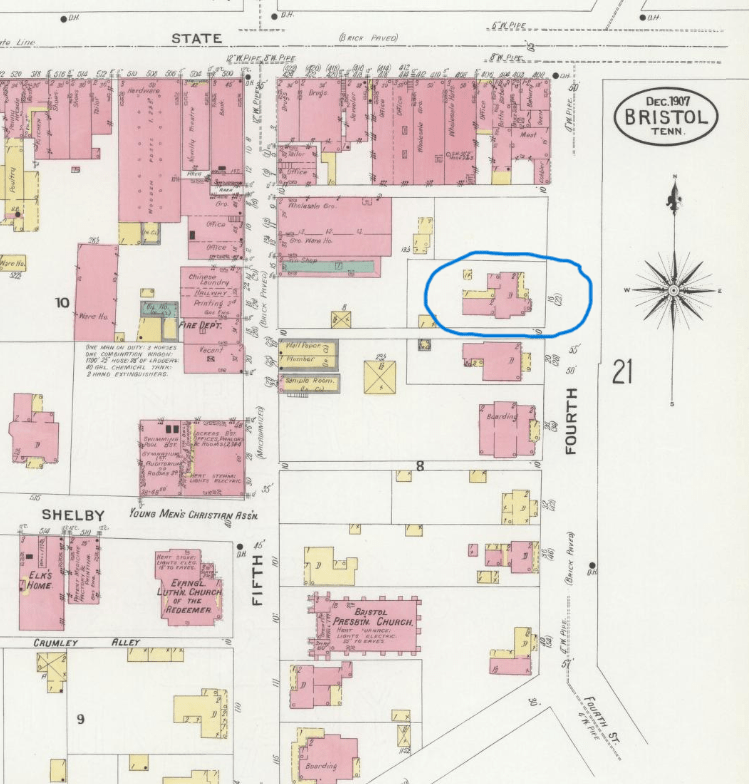
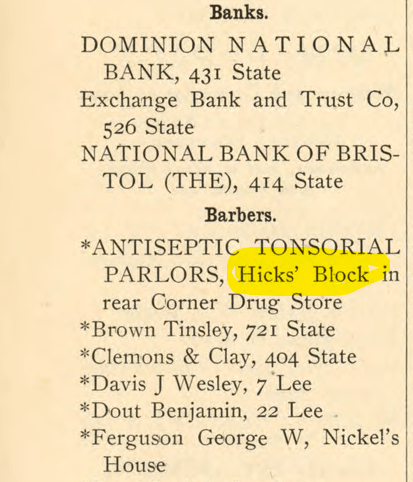
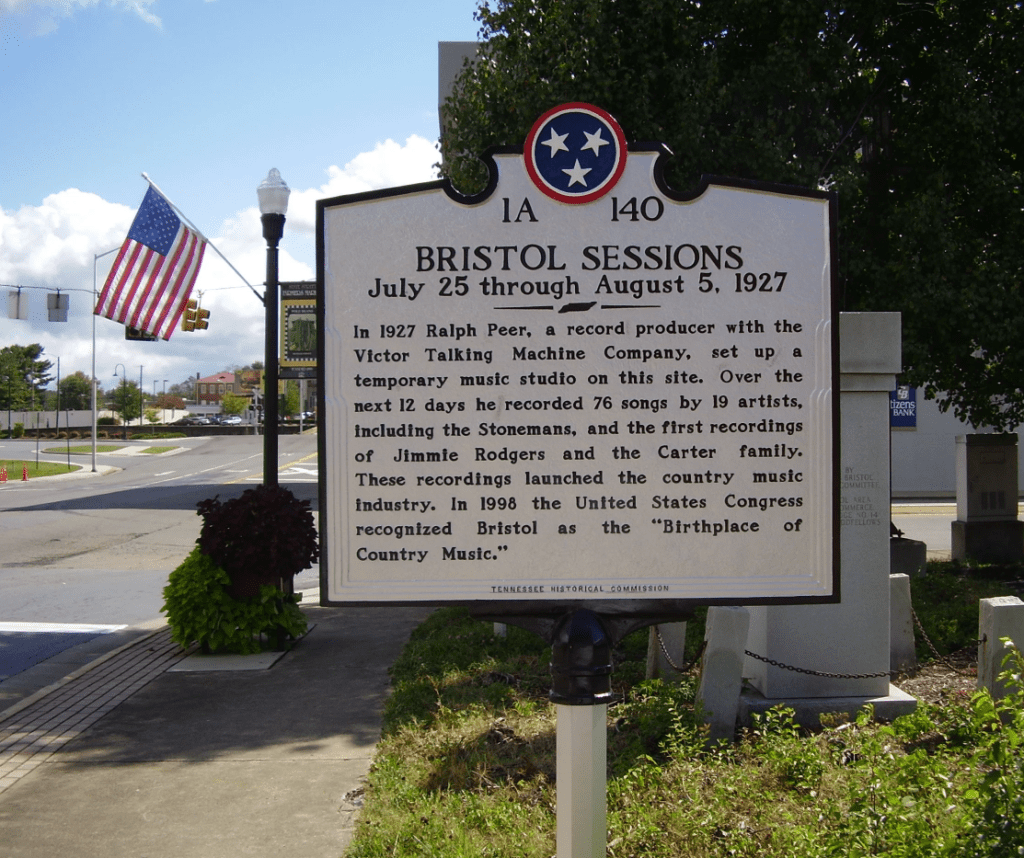
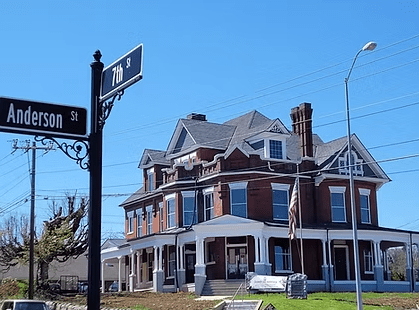
The Bristol that Hicks knew was later altered dramatically by urban renewal. In the 1960s and 1970s, the Anderson Street–Edgemont Avenue area was heavily cleared and reworked for redevelopment and transportation improvements, and only a handful of nearby historic buildings survived. Lost were the Hicks House, Anderson House, and several others, which I imagine resembled the current E.W. King House shown below. Today, Edgemont Avenue is known as M.L.K. Jr. Boulevard.
Mary Elizabeth McCormick Hicks
That broader household importance extended through Mary Elizabeth McCormick Hicks. By 1903, Mrs. J. F. Hicks was serving as president of the Bristol Chapter of the Daughters of the Confederacy and publicly honored Confederate veterans. In 1913, she was still hosting chapter meetings at the Hicks home. In 1918, during World War I, she served as chairman of the woman’s committee of county national defense in Sullivan County.
The Hicks household, therefore, remained civically central through both husband and wife.
His Last Return Home
Even in old age, Hicks stayed publicly visible. He and his wife attended the Appalachian Exposition at Knoxville in 1910. He still wintered in Florida and Captiva. His name still appeared in civic and social notices in both Bristol and Kingsport.
Then, in April 1920, after returning from a winter in Florida on Monday night, he died at his Bristol home on Wednesday morning, age 91. That final detail feels especially fitting. His later years had been divided between the city he had helped build and the Florida world into which he had extended both family and investment. He came home from that wintering life only to die in the place where his significance had ripened most fully.
Why His Life Matters
The obituaries remembered him exactly as the long record suggests they should have: as a prominent citizen, a physician, a property owner in Kingsport, a man whose judgment on public and financial questions was highly regarded, and one whose sound business ability had helped Bristol overcome serious financial difficulties. They also confirmed that he owned property in Bristol, Kingsport, and Jacksonville, had lived in Texas and South America, and remained a member of First Baptist Church to the end.
That is finally why his life matters. Dr. J. F. Hicks was not just colorful, though his life was unusually wide-ranging. He was not just prosperous, though he clearly was. He mattered because he stood where local history is actually made: where streets are paved, where water systems become public issues, where towns decide whether to modernize, where business blocks rise, where hospitals and banks and drugstores and lawyers find their address, where colleges survive through trustees and benefactors, where railroads are promoted, where mining and land speculation reshape regions, and where winter colonies become part of a wider Southern geography of wealth and mobility.
He was not a national celebrity. He was something in some ways more important: a regional builder, the sort of man newspapers kept noticing because he kept turning up wherever public life and private enterprise touched. In the story of Bristol—and to a meaningful degree in the stories of Kingsport, Captiva, and Virginia Intermont—Dr. J. F. Hicks was one of the builders.
 Kingsport Spirit
Leave a comment