Chances are that if you order a steak at one of America’s finest steakhouses—or a burger at almost any restaurant—the beef is Angus. But that wasn’t always the case.
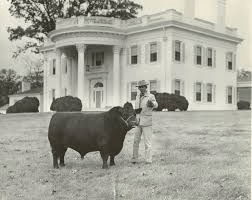
In the early 1900s, Angus cattle competed with Herefords and Shorthorns for commercial dominance. Angus had been imported from Scotland beginning in 1873, and the American Aberdeen-Angus Breeders’ Association (founded in 1883) established pedigree recording systems that allowed breeders to document and improve bloodlines systematically.¹
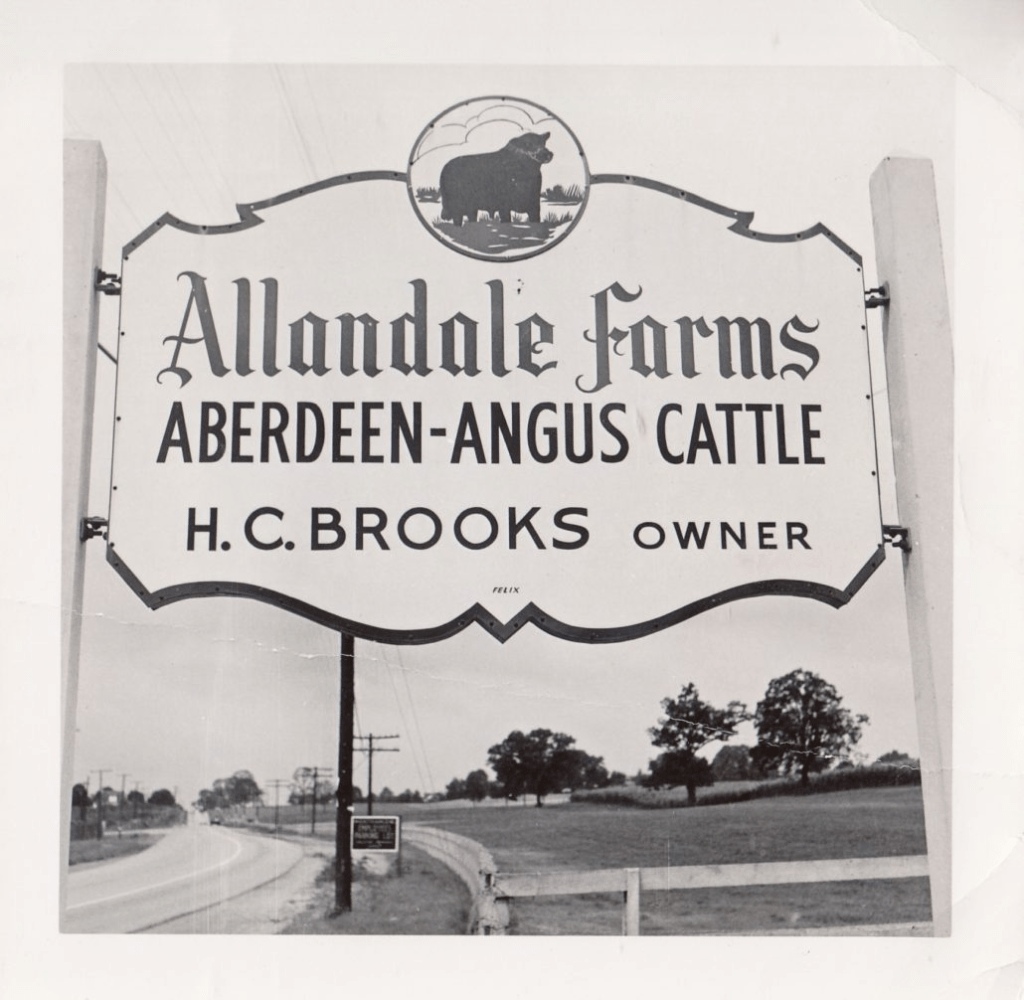
By the mid-twentieth century, progressive seedstock programs were helping shape the future of the breed. One of those programs was here in Kingsport at Allandale Mansion.
Under Harvey C. Brooks, Allandale operated as a nationally competitive Angus seedstock herd. In 1954, Brooks joined George Wheeler of Hickory Cove Farm (Rogersville, TN) and the Keefauver Brothers (Boones Creek, Jonesborough, TN) to purchase an elite sire from Connecticut—Moles Hill Eileenmere 78. According to the East Tennessee Angus Association’s centennial history, this bull’s offspring propelled these farms into renewed national prominence through major show-ring victories and strong sale averages.²
This purchase mattered because it connected East Tennessee to the broader national genetic network. Rather than relying solely on local bloodlines, these breeders intentionally imported elite genetics, strengthening the region’s influence in Angus breeding.
Allandale’s prominence continued. In 1965, the farm exhibited an International Champion female at the Chicago International Livestock Exposition and bred the Reserve Champion bull. Its herd sire Ertmire of Haymount was named “Sire of the Year” for consecutive years.³ These achievements confirmed that East Tennessee Angus cattle could compete at the highest national levels.
Meanwhile, reproductive technologies such as artificial insemination—expanding in U.S. livestock production after World War II—began allowing superior sires to influence herds far beyond geographic boundaries.⁴ The logic Allandale had embraced—identify elite genetics and multiply their influence—became the foundation of modern beef breeding.
The final transformation came in 1978 with the launch of Certified Angus Beef, which established objective carcass specifications and tied Angus-influenced beef to measurable quality standards.⁵ This program turned Angus from a respected breed into a nationally recognized premium brand.
Today, the prevalence of Angus beef in restaurants across America reflects more than taste—it reflects over a century of structured breeding, organized record keeping, strategic genetic exchange, and market validation. Allandale was an early and influential part of that story.
From a Kingsport hillside to dinner plates nationwide, the Angus standard was built one generation at a time.
In 1969, the Brooks family bequeathed Allandale Mansion, located at 4444 West Stone Drive, to the City of Kingsport for permanent preservation as a public asset.
Abbreviated Sources:
- American Angus Association, “History of the Angus Breed.”
- East Tennessee Angus Association, Counting Centuries: ETAA Centennial History (2024).
- Allandale Mansion Historical Archives, Kingsport, TN.
- R. H. Foote, “The History of Artificial Insemination,” Journal of Animal Science 80 (2002).
- Certified Angus Beef, “Brand History,” Wooster, OH.


Leave a Reply