I recently spent time in Savannah, Georgia, and was surprised to find that its metro population (640,193) is comparable to the Johnson City-Kingsport-Bristol, TN-VA metro area (598,800). Despite similar population sizes, living in Southeast Georgia and Northeast Tennessee offers distinct experiences shaped by differences in climate, lifestyle, and cost of living. Each region appeals to different preferences, with unique advantages and challenges.
A key difference is the neighboring states they border. While both regions adjoin other states, the South Carolina side of the Georgia border is more economically robust than the Virginia side of the Tennessee border. Higher population growth in neighboring South Carolina drives increased traffic to Savannah-Hilton Head Regional Airport (SAV), but Tri-Cities Regional Airport (TRI) provides connections to three hubs and two leisure destinations.
Population Density
The population in Southeast Georgia is more concentrated around urban centers like Savannah. Coastal counties have higher population density, with more transient residents due to tourism and military activity, while inland areas are more rural. In contrast, Northeast Tennessee is spread across the Tri-Cities region (Johnson City, Kingsport, Bristol) and surrounding rural areas. Northeast Tennessee overall has a lower population density and a more stable, long-term population, with fewer seasonal fluctuations (and therefore less traffic).
Interstate Traffic
Traffic on I-95 and I-16 has a significant impact on Southeast Georgia, driven by freight transport, tourism, and regional commuting. As a major north-south corridor, I-95 sees high volumes of truck traffic and tourists moving from New York to Florida. The port of Savannah, one of the largest in the U.S., exacerbates this with heavy freight traffic, creating bottlenecks. I-16, connecting Savannah to Atlanta, also handles substantial regional freight and commercial transport, contributing to slowdowns.
In Northeast Tennessee, I-81 and I-26 similarly affect traffic through a mix of freight, regional commuting, and tourism. I-81, a major freight route from New York to New Orleans, brings large trucks through cities like Kingsport, Bristol, and Johnson City, causing congestion at interchanges, especially for commuters. I-26, connecting to Asheville and Charleston, increases traffic flow, particularly in Johnson City, with additional slowdowns from truck traffic.
Climate
One of the most striking contrasts is the climate. Savannah and Southeast Georgia have a humid subtropical climate with long, hot summers, mild winters, and high humidity. The region is also prone to tropical storms and hurricanes. Meanwhile, Northeast Tennessee experiences four distinct seasons. Summers are warm but less humid, and winters bring occasional snowfall, particularly in higher elevations—ideal for those who enjoy seasonal changes.
Housing
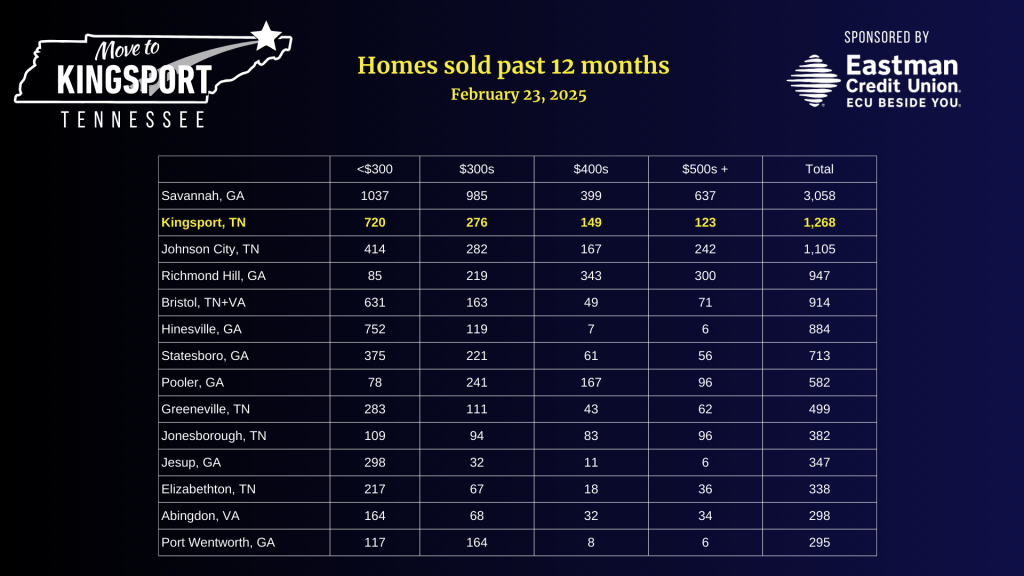
The housing market in Southeast Georgia is more expensive and competitive, driven by its coastal location, tourism, and military presence, leading to higher home prices, property taxes, and insurance costs. In contrast, Northeast Tennessee offers a more affordable and stable market with lower home prices, property taxes, and a lower cost of living. Rental costs are also higher in Southeast Georgia, partly due to vacation rentals, while Northeast Tennessee provides more affordable long-term housing. Buyers seeking a coastal, urban lifestyle may prefer Southeast Georgia, while those looking for lower costs and a slower-paced environment may find Northeast Tennessee more appealing.
Cost of Living
Affordability is another key distinction. Savannah’s cost of living, especially housing, is higher due to its coastal location and popularity as a tourist destination. Northeast Tennessee, by contrast, offers more affordable housing, lower property taxes, and generally lower everyday expenses, making it an attractive option for those seeking a lower cost of living.
Taxes
State and local taxes differ significantly between Southeast Georgia and Northeast Tennessee. Georgia imposes an income tax with rates ranging from 1% to 5.75%, while Tennessee has no state income tax, making it more tax friendly. Both states have a sales tax of around 7%, but local taxes can bring the total rate in Southeast Georgia to 8% and in Northeast Tennessee to 9.75% in some areas. Property taxes are generally higher in Georgia (averaging 0.87%) compared to Tennessee (around 0.69%), making Tennessee more appealing for those seeking to minimize their tax burden.
Lifestyle
Southeast Georgia offers a coastal, urban environment with access to beaches, historic landmarks, and a vibrant tourism industry. Residents enjoy festivals, museums, and outdoor activities like boating, but the influx of tourists can make the city feel crowded. Northeast Tennessee, on the other hand, provides a more rural, outdoor-oriented lifestyle with access to the Appalachian Mountains. The Tri-Cities region offers hiking, biking, and nature exploration, along with strong educational and healthcare systems that foster a close-knit community—making it ideal for families.
Economy
The economic focus of each region reflects its distinct industries. Savannah’s economy is driven by its port—one of the largest in the U.S.—as well as tourism and agriculture, with key crops like peanuts and cotton. In contrast, Northeast Tennessee’s economy is rooted in advanced manufacturing, healthcare, and education, with major employers like Eastman Chemical and East Tennessee State University. While both regions are growing, Savannah leans toward trade and agriculture, whereas the Tri-Cities area thrives on manufacturing and healthcare.
Higher Education
Both regions have notable universities:
Georgia Southern University (26,041 students) is known for strong programs in business, engineering, education, and health sciences. The Parker College of Business excels in logistics and supply chain management, while the engineering school specializes in applied research. The university also has well-regarded programs in nursing, cybersecurity, and sustainability.
East Tennessee State University (13,483 students) is renowned for health sciences, education, business, and Appalachian studies. The Quillen College of Medicine and Bill Gatton College of Pharmacy emphasize rural healthcare, while ETSU also has nationally recognized nursing and public health programs. Additionally, it is home to one of the leading programs in Appalachian Studies and Bluegrass, Old-Time, and Roots Music.
Athletics
Georgia Southern is best known for its football program, which boasts six FCS national championships and competes in the FBS Sun Belt Conference. The school also excels in baseball, golf, and track & field.
ETSU is known for its men’s basketball program, with multiple NCAA Tournament appearances. The football team, reinstated in 2015, competes in the FCS Southern Conference. ETSU also has a strong golf program, producing PGA Tour players like Rhys Davies and Seamus Power.
Both regions have semi-professional baseball. Southeast Georgia is home to the Savannah Bananas, a wildly popular team that blends baseball with entertainment through its unique “Banana Ball” format. While originally part of the collegiate summer Coastal Plain League (CPL), the Bananas have since transitioned into an independent touring team with national appeal.
In contrast, Northeast Tennessee has a more traditional baseball focus, with multiple teams in the Appalachian League, a collegiate summer league that once served as a minor league system for MLB. Teams like the Johnson City Doughboys, Kingsport Axmen, Bristol State Liners, and Greeneville Flyboys provide competitive development for college players in a wood-bat league format.
Military & Defense
Fort Stewart (near Hinesville, GA) is the largest Army installation east of the Mississippi and home to the 3rd Infantry Division. It plays a key role in military training, deployment, and family support.
Holston Defense Corporation (Kingsport, TN) is vital to national security, producing propellants, explosives, and munitions for the U.S. Department of Defense. As part of BAE Systems, it ensures a steady supply of ammunition for military operations.
The James H. Quillen Mountain Home VA Medical Center (Johnson City, TN) is a full-service hospital offering inpatient care, emergency services, surgery, and specialty care, with strong ties to ETSU’s medical school. In contrast, the Savannah VA Clinic is an outpatient facility focused on primary care, mental health, and minor diagnostics, with referrals to larger VA hospitals. Veterans needing comprehensive or emergency care would be better served at Mountain Home, while Savannah’s clinic is suited for routine and outpatient needs.
Conclusion
Choosing between Southeast Georgia and Northeast Tennessee depends on personal preferences. Savannah offers a warm, coastal lifestyle with cultural amenities but comes with a higher cost of living and a bustling tourism scene. Northeast Tennessee provides a more affordable, nature-centric lifestyle with seasonal variety and a slower pace of life. Both regions have distinct advantages, making the decision a matter of what best aligns with one’s lifestyle and priorities.
 Kingsport Spirit
Leave a comment