CONDENSED VERSION
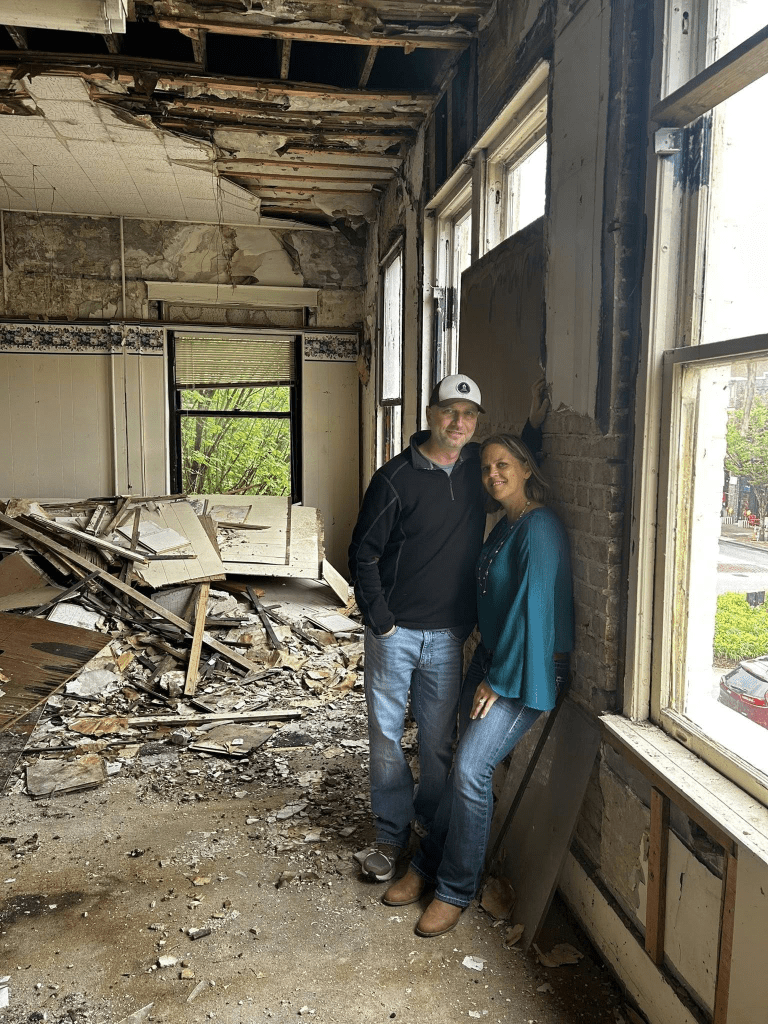
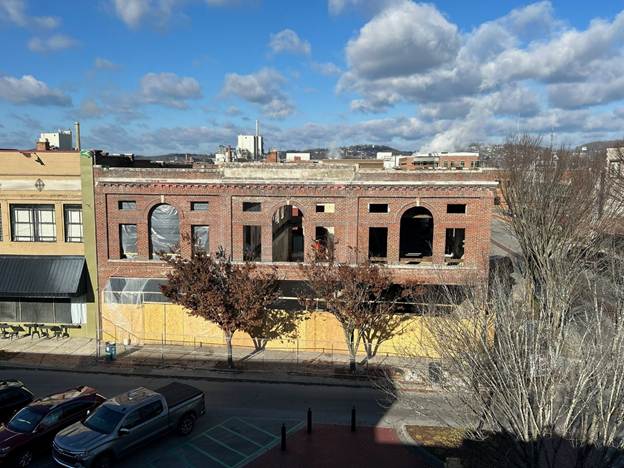
Perhaps you, like me, have been following the renovation of the Hicks Block Building at Broad and Market in downtown Kingsport. If not, search “Hicks Block – Kingsport” on Facebook and look through the photos. Architect Kattie Stanton-Casebolt and her husband Eric bought the building just in time to save it from demolition and have poured heart, talent, and sweat equity into restoring it. Many older residents remember it as Clinchfield Drug. Others remember TK’s Big Dogs, Palace Barber Shop, or Palace Fruit, predecessor to Palace Vending.
But who was Hicks?
Dr. John Franklin Hicks, widely known as Dr. J. F. Hicks, was not one of Kingsport’s founders. Like many early builders, he did not come here to run a local business. He saw opportunity, built speculative multi-use commercial space, and leased it. When he invested in Kingsport, he was about 89 years old. By then, he had already helped do something similar in Bristol.
Born January 3, 1827, according to his tombstone at East Hill Cemetery in Bristol, Hicks grew up in the Jackson–Trenton, Tennessee area. He was 9 when the Alamo fell in 1836 and 18 when Texas became a state in 1845, setting off the Mexican-American War. By 1853, while still in Madison County, he was already appearing in a railroad meeting at Denmark, Tennessee, an early sign of a lifelong instinct for transportation, growth, and civic development.
He married Sarah Winifred Harbert that same year. Their son, Dr. Thomas Howell Hicks, later became one of Knoxville’s leading physicians. Their daughter, Trula Joyce Hicks, later married Dr. William Alexander Read, and after his death, William H. Rouse, former mayor of Bristol, Virginia. After Sarah’s death in 1888, Hicks married Mary Elizabeth McCormick, who became a civic figure in Bristol herself.
By 1856, Hicks was in Colorado County, Texas, in the Columbus–Alleyton area, when Andrew Johnson was governor of Tennessee. He was not just a doctor there. Records suggest he was also a landholder, with a manager overseeing his property. He remained in Texas through the Civil War and Reconstruction. Then came the most unusual turn in his life: in 1869, the Galveston Daily News reported that Dr. Hicks and his family had left Texas to seek homes in Brazil, placing him in the little-known postwar migration of Southerners to South America.
The family later returned through Tazewell, Virginia, where Hicks was already visible by 1873, again presiding over a railroad meeting. He moved to Bristol in 1874, during the presidency of Ulysses S. Grant, and became one of the city’s most influential citizens: physician, commercial builder, city councilman, Board of Trade president, railroad advocate, and practical financial strategist. He helped Bristol through serious fiscal strain, debated the city’s water supply and the most economical way to secure it, and even laid the second ceremonial paving brick at Bristol’s first street-paving ceremony in 1900.
His Bristol investments were extensive: hotels, brick commercial blocks, office buildings, major downtown parcels, and later properties in Kingsport and Jacksonville, Florida. In Kingsport, the Hicks Block Building at 152–160 Broad Street, built by 1916, became one of Broad Street’s earliest important mixed-use commercial blocks. Over the years it housed a pool hall, grocery, bank, Clinchfield Drug, Community Hospital, YMCA quarters, law offices, insurance agencies, barber and beauty shops, shoe stores, jewelers, tailor shops, recruiting offices, and tax services. During the 1918 Spanish flu crisis, its second floor served as hospital space.
Hicks also helped support the school that became Virginia Intermont College. The later J. F. Hicks Memorial Library reflected not just his trustee service, but the long benefaction of the broader Hicks family, including a substantial bequest from Mary McCormick Hicks.
He spent later winters on Captiva Island, where he built a winter home, and in Jacksonville, where he held property. He returned from Florida in April 1920 and died in Bristol at age 91. He was not a national celebrity. He was something more grounded and perhaps more important: a regional builder, one of the men who helped shape Bristol, Kingsport, Captiva, and Virginia Intermont in lasting ways.
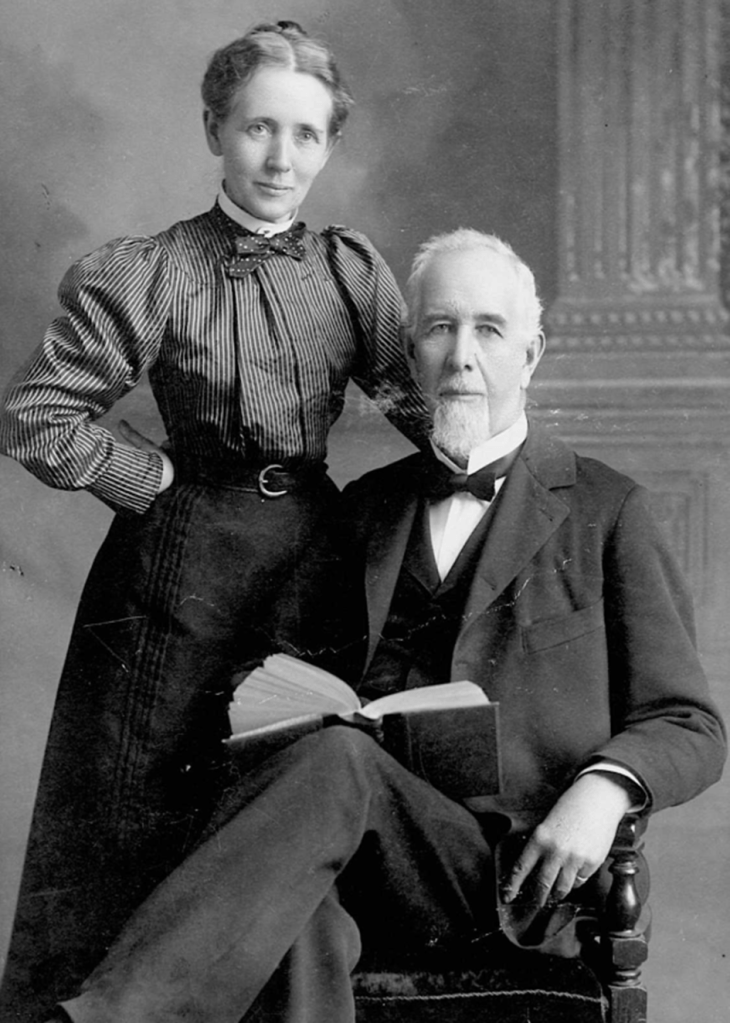
Dr. J.F. Hicks and his second wife, Mary McCormick Hicks.
 Kingsport Spirit
Leave a comment