Through an unexpected turn of events, my son and daughter-in-law were given a rare opportunity to visit the Holy Land—one that was simply too good to pass up. Many people don’t realize that my son’s foundational degree is in Religion from Carson-Newman University, where he also served as a captain of the football team. His advanced degrees in teaching, education, and sports science came later.
Like me, he has a deep fascination with geography. Where my interests tend to center on our family’s ancestry and European roots, his focus is on biblical genealogy and the translation of ancient texts. You could argue that the pursuits aren’t all that different—they just reach back a bit further in time.
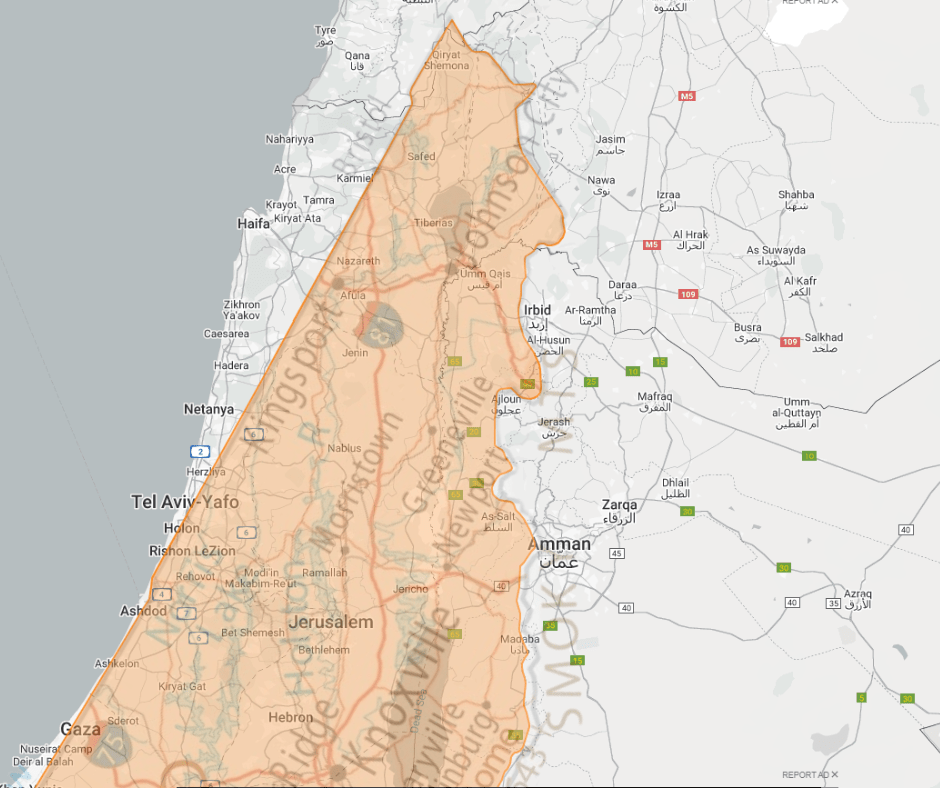
I came across a website that lets you take the outline of a U.S. state or a foreign country and superimpose it onto another location in the world. Because we’re used to seeing a round earth flattened onto a map, sizes are often distorted and exaggerated. This tool corrects for that distortion, revealing that countries like Canada and Russia are far smaller than they appear on traditional flat maps. Over time, using it has helped me understand relative geography much more clearly.
With that in mind, I placed the outline of Tennessee over Israel. To my surprise, the entire country fit comfortably within the eastern half of our state. Considering the immense historical, religious, and geopolitical impact that has radiated out of the Middle East, it’s striking to realize how much of the world’s story has unfolded within such a small physical footprint.
So here are Bible highlights told as if they occurred in East Tennessee.
Oak Ridge — Valley of Elah
(c. 1000 BC)
Israel faces Goliath, who mocks the armies of the living God. David steps forward in faith, refusing armor and trusting the Lord. With a sling and a stone, the giant falls, and Israel is delivered by God’s power, not human strength.
Scripture: 1 Samuel 17:1–54
Maryville — Hebron
(c. 1000–993 BC)
After Saul’s death, David is anointed king. He reigns in Hebron, waiting for God’s timing as the kingdom is established and strengthened by the Lord.
Scripture: 2 Samuel 2:1–4; 2 Samuel 5:1–10; 1 Chronicles 11:1–9
Dandridge — Beit She’an
(c. 1000 BC)
Saul and his sons fall in battle against the Philistines. Their bodies are displayed on the city wall. David hears the news and mourns deeply, lamenting the fallen king and honoring the Lord’s anointed.
Scripture: 1 Samuel 31:1–13; 2 Samuel 1:17–27
Morristown — Valley of Jezreel (Armageddon)
(Judges → Kings → Prophets → Future)
This valley witnesses decisive moments throughout Israel’s history—Deborah’s victory, Gideon’s deliverance, Saul’s defeat, and Josiah’s death. Scripture later speaks of a final gathering of nations here.
Scripture: Judges 4:12–16; Judges 7:1–25; 1 Samuel 29–31; 2 Kings 23:29–30; Revelation 16:12–16
Knoxville — Bethlehem
(c. 6–4 BC)
Jesus is born during the reign of Caesar Augustus. Angels announce good news to shepherds, who come and worship the newborn King.
Scripture: Luke 2:1–20; Matthew 1:18–25
Kingsport — Nazareth
(c. 4 BC–AD 30)
Jesus grows in wisdom and stature. When He teaches in the synagogue, He declares Isaiah fulfilled. The people marvel, then reject Him when He speaks of God’s mercy reaching beyond them.
Scripture: Luke 2:39–52; Luke 4:16–22; John 1:45–46
Bays Mountain — Mount Precipice
(AD 30)
The crowd becomes enraged and drives Jesus to the edge of the hill, intending to kill Him. His hour has not yet come, and He passes through them unharmed.
Scripture: Luke 4:28–30
Newport — Judean Wilderness
(AD 30)
Jesus is led by the Spirit into the wilderness. He fasts forty days and resists Satan’s temptations with Scripture, remaining faithful to God’s will.
Scripture: Matthew 4:1–11; Mark 1:12–13; Luke 4:1–13
Johnson City — Tiberias
(AD 30–32)
Jesus travels throughout the region, teaching and healing. Crowds gather as His fame spreads.
Scripture: Matthew 4:23–25; Mark 1:32–39; Luke 4:40–44
Boone Lake — Sea of Galilee
(AD 30–32)
Jesus calls fishermen to follow Him. He calms storms, feeds thousands, and walks on the water, revealing His authority and divine identity.
Scripture: Matthew 4:18–22; Mark 4:35–41; Matthew 14:13–33; John 6:1–21
Bristol — Capernaum
(AD 30–32)
Jesus teaches with authority, heals the sick, forgives sins, and raises the dead. A woman suffering twelve years touches His garment and is healed by faith; Jairus’s daughter is restored to life.
Scripture: Mark 1:21–28; Mark 2:1–12; Matthew 9:18–26; Mark 5:21–43; Luke 8:40–56
Boone Lake — Tabgha
(AD 30–33)
Jesus feeds the multitudes with loaves and fish. After His resurrection, He appears by the water, restoring Peter and commissioning him to shepherd God’s people.
Scripture: Matthew 14:13–21; Mark 6:30–44; John 21:1–19
Holston Mountain — Mount of Beatitudes
(AD 30–31)
Jesus teaches the crowds the values of the Kingdom—humility, mercy, righteousness, forgiveness, prayer, and trust in God.
Scripture: Matthew 5:1–7:29; Luke 6:17–49
Roan Mountain — Caesarea Philippi
(AD 31–32)
Peter confesses Jesus as the Messiah. Jesus foretells His suffering, death, and resurrection and is transfigured before His disciples.
Scripture: Matthew 16:13–28; Mark 8:27–9:1; Luke 9:18–27; Matthew 17:1–8
Jefferson City — Jerusalem
(AD 33)
Jesus enters the city to shouts of praise, cleanses the temple, celebrates Passover, is betrayed, tried, crucified, and buried.
Scripture: Matthew 21–27; Mark 11–15; Luke 19–23; John 12–19
Mossy Creek/Carson-Newman — Mount of Olives
(AD 33)
Jesus weeps over the city, teaches about future judgment, and prays in anguish before submitting to the Father’s will and being arrested.
Scripture: Luke 19:41–44; Matthew 24:1–3; Matthew 26:36–56; Mark 14:32–52; Luke 22:39–53; John 18:1–11
Rutledge — Garden Tomb
(AD 33)
Jesus is laid in the tomb. At dawn, the stone is rolled away, angels announce His resurrection, and Jesus appears to His followers.
Scripture: Matthew 27:57–28:10; Mark 15:42–16:11; Luke 23:50–24:49; John 19:38–20:29
Douglas Lake — Dead Sea
(Post-resurrection biblical reflection)
Scripture speaks of judgment and desolation, but also of living water flowing from God to bring life where death once ruled.
Scripture: Ezekiel 47:1–12; Zechariah 14:8; John 7:37–39; Revelation 22:1–2
Foothills Parkway — Masada
(AD 66–73)
Human strength and defiance reach their limits. Scripture reminds us that victory and salvation belong to the Lord alone.
Scripture: Psalm 20:7; Proverbs 21:31; Psalm 127:1
Closing Scripture
“He was buried, and He was raised on the third day according to the Scriptures.”
Scripture: 1 Corinthians 15:4
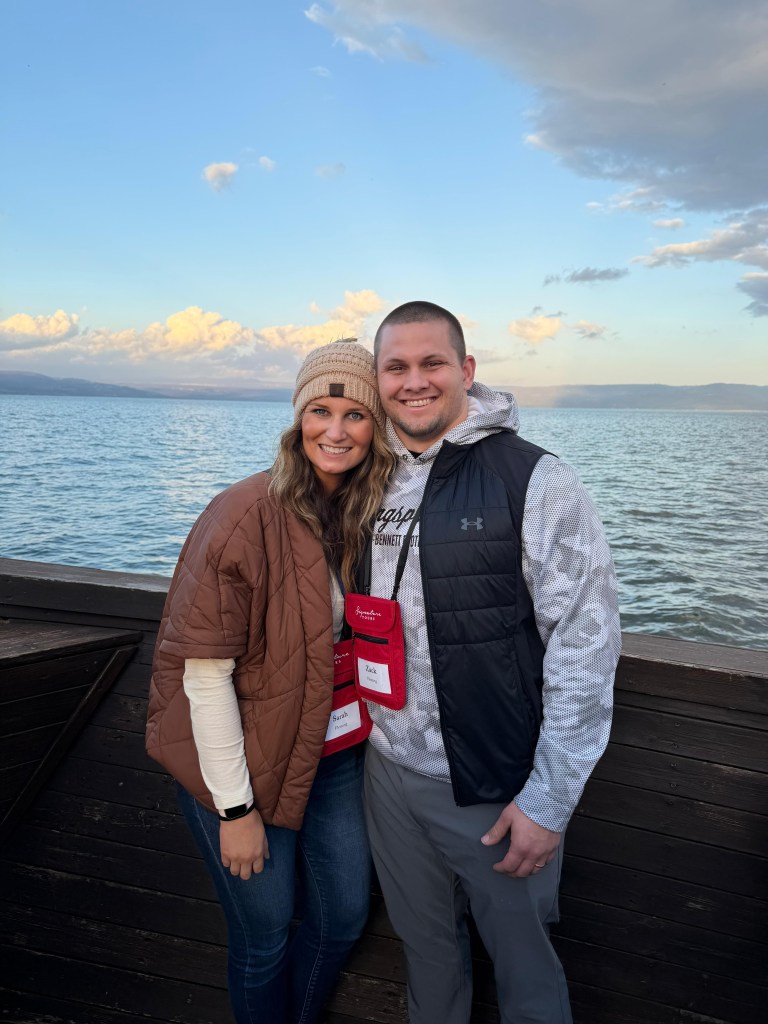
It has been a joy to watch their reels, posts, and photos as they share the emotions that come with seeing these biblical sites and stories come to life. At times, he has wandered off on his own, overcome by the weight of the moment and the meaning of the place.
New Year’s Eve naturally invites reflection and hope for what lies ahead. Experiencing the Holy Land during such a moment feels especially meaningful. Adding to that, the gift of both sets of grandparents being able to spend New Year’s Eve together with their grandchildren makes the occasion even more special. These seasons pass quickly and are treasured more than words can express.
Here’s wishing you a new year filled with peace, purpose, and all the best.
 Kingsport Spirit
Leave a comment