Many know Kingsport as the “Model City” incorporated in 1917, but it didn’t happen from a blank slate with a big bang.
Before the planned city, there was a thriving riverport community.
King’s Port (or Boat Yard) was settled in 1761, incorporated in 1822, and faded after the Civil War as railroads replaced boats as the primary means of commerce. It was limited to the immediate properties adjoining the river (sometimes today called Old Kingsport). It wasn’t until 1963 that the original King’s Port was annexed to the modern city.
In the early days, Island Road and Old Stage Road (often the same route) served as the main thoroughfare between Abingdon and Knoxville. Later they were collectively known as the “Lee Highway”.
The historic route closely followed the paths of today’s Watauga Street, Center Street (once known as the Bristol Highway), and Memorial Boulevard (Highway 126) heading east, with Sullivan Street and Netherland Inn Road extending west. Sections of these routes were later modified to align with the Model City plan. Notably, there was no Church Circle (initially called Civic Circle). Instead, Watauga Street originally wound across the hillside near St. Paul’s Episcopal Church, passing through what is now the Radial Streets neighborhood and the Park Hill historic district. It eventually connected to a bridge over Reedy Creek at the present-day intersection of Sullivan Street and Lovedale Drive. Travelers could also continue along what was known as the Scott County Road, now roughly aligned with Donelson Drive or Lynn Garden Drive.
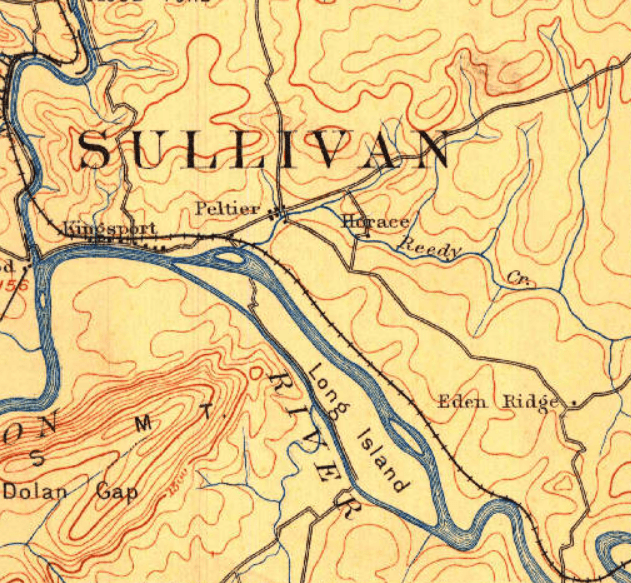
On 1894 USGS maps, the intersection known as “Peltier” marked a significant center of commerce from the post-Civil War era until Kingsport’s incorporation in 1917. Although today the entire valley is considered part of Kingsport, Peltier was nearly two miles from the riverport and functioned as an independent community. The next settlement to the east was Eden’s Ridge, located approximately 3.7 miles away—a considerable distance at the time, emphasizing how distinct these communities were from one another.
The route was lined with homes and farms, many of which still stand today as silent witnesses to the past. If you look closely, you can spot houses that predate 1917, now nestled among more contemporary structures. These historic homes have become part of the everyday scenery, blending seamlessly into the landscape that locals pass by without a second thought.
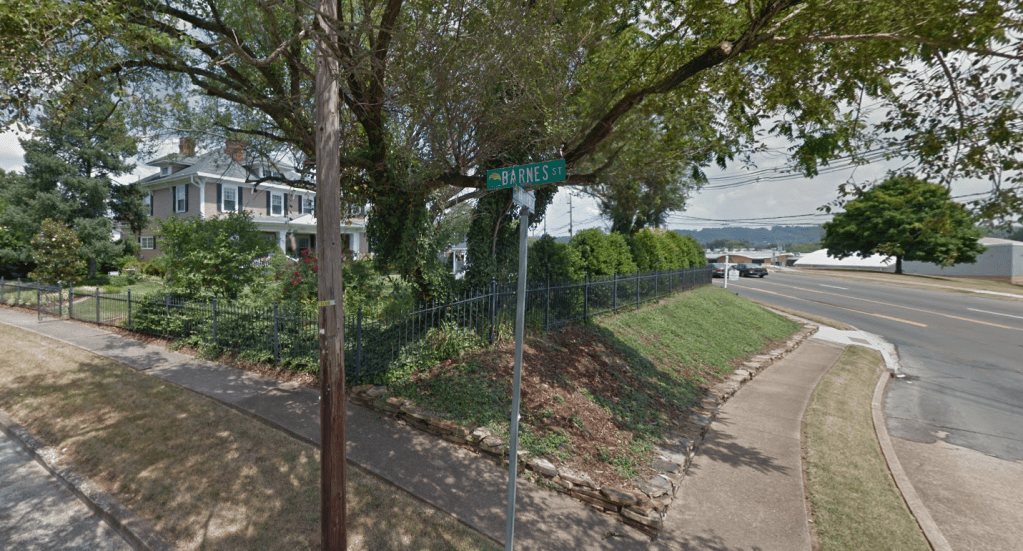
There are often clues of the land ownership by the name of side streets. For example, Barnes Street intersects with Watauga Street near its intersection with Center Street.
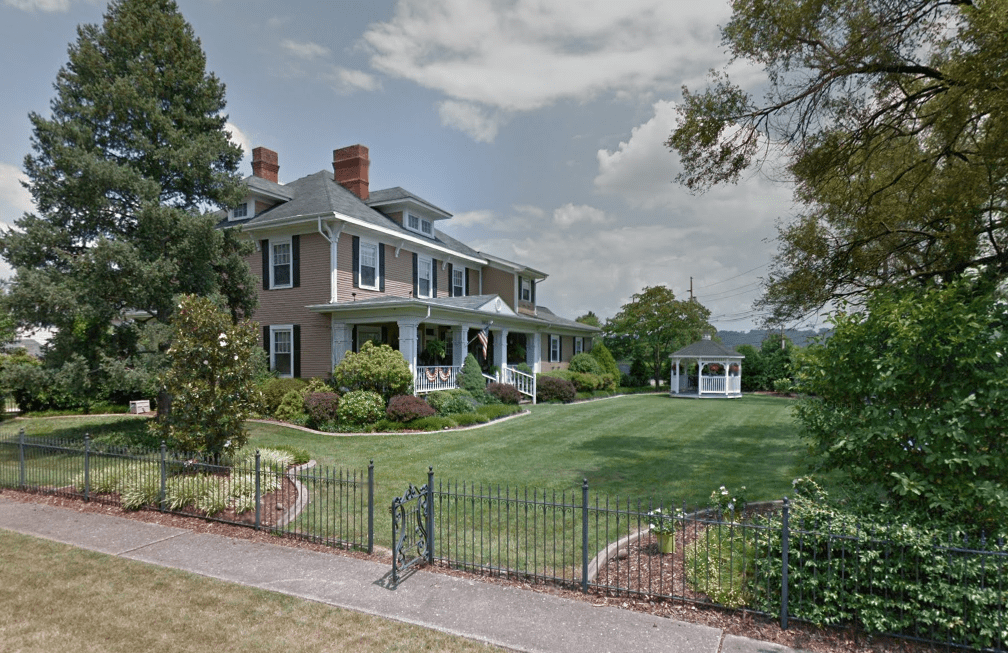
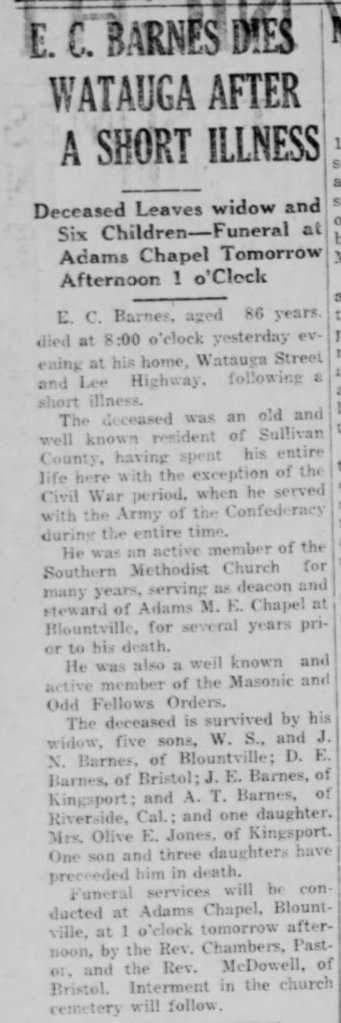
Tucked behind a hedgerow at 1612 Watauga Street stands an elegant 5-bedroom, 6-bathroom home built in 1890. Though now a private residence, it is fondly remembered by many as the Fox Manor Historic Inn, which operated as a charming bed and breakfast for several years. This stately home was constructed by Elijah Cross Barnes (known as E.C.), a notable figure in the area’s history. He built the house just 26 years after his return from the Civil War.
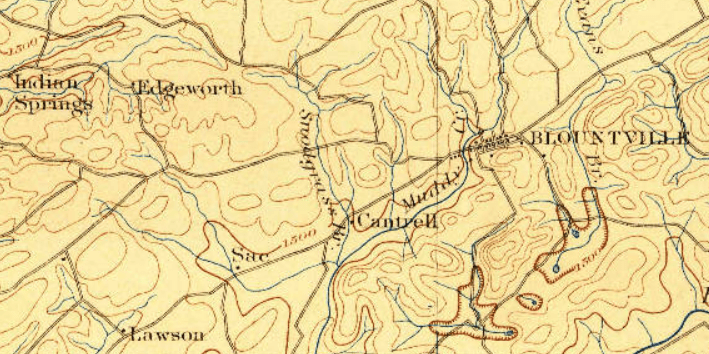
The Barnes family name is linked to the historic Sullivan County communities of Cantrell and Gunnings. While Cantrell’s exact location has faded from collective memory, it once stood at the intersection of today’s Highway 75 and Muddy Creek Road, with a Blountville postmark. In contrast, Gunnings remains recognizable as the area where Shipley Ferry Road intersects with Highway 126 near I-81, now home to Sullivan Central Middle School.
The name “Barnes” is often mentioned alongside many of the most recognizable names in Sullivan County, including Adams, Cross, Shipley, Droke, Hamilton, Harr, Vance, Anderson, and Booher—most of whom have roads, chapels, or communities named in their honor.
E.C. Barnes was born in 1842 and died in 1928. He enlisted in the Confederate Army’s 59th Tennessee Infantry at Bluff City in 1862 at age 20.
According to the TNGENWEB site, the unit “moved to Vicksburg in December 1862, where it remained until the surrender of that city on July 4, 1863.” The men “engaged the enemy” but after 6 months were “greatly exhausted” and “remained in entrenchments from (May 6) on”. “During these 47 days, under the terrific fire of the enemy’s artillery and infantry, the officers and men of the brigade bore themselves with constancy and courage. Often half fed, and illy clothed, exposed to the burning sun and soaking rain, they performed their duty cheerfully and without a murmur.”
After the fall of Vicksburg, he was a prisoner of war. But just days later, “they marched 150 miles to Enterprise, Mississippi; transportation thence to homes in East Tennessee; exchanged September 12, 1863. By permission…the major portion of the company mounted themselves, and were assigned to duty in East Tennessee as scouts and guides…in October 14, 1863, Zollicoffer (now Bluff City) evacuated by our forces falling back to Abingdon, Virginia. In February 1864, the 59th was reported stationed at Kingsport and Rogersville.”
On January 7, 1868, he married Rachel Adams (think Adams Chapel and Adams Chapel Road) just off Highway 126.
According to his obituary, they had 11 children, but Ancestry.com lists another that died at birth. All total, they had 7 sons and 5 daughters.
He was active in County politics and was a founding director of Farmers & Merchants Bank on Broad Street (beside Wallace News). He died in 1928 just shy of his 82nd birthday. The next year the stock market crashed, the Great Depression began, and the fledgling bank failed. Today the bank façade is still discernable, but it is in severe jeopardy of demolition due to its dilapidated condition.
While several descendants still live in the area, many will remember his great-grandson Jessee Cross Barnes, Jr. (“Jack”), who served as a longtime educator and eventually Superintendent of Sullivan County Schools. He still lives on a remnant of the family’s legacy land off Highway 126 near Adams Chapel in Blountville.
The next time you pass by a house, take a moment to reflect on the stories it holds. Each home is rich with family history and memories, though many of these stories have faded over time, quietly woven into the fabric of the community.
If you have more stories to share of the E.C. Barnes family or legacy, I’d love to hear about them.

 Kingsport Spirit
Leave a comment