It was 1917. The fledgling city of Kingsport had been incorporated for two months. “Separate but equal” was the prevailing law, upheld by the U.S. Supreme Court in Plessy vs. Ferguson in 1896. The NY-based developers were trying to build a Model City in the rural South. They were heavily influenced by the overcrowded tenements, with which they were very familiar and trying to avoid. Cramped, poorly lit, under ventilated, and usually without indoor plumbing, the tenements were hotbeds of vermin and disease, and were frequently swept by cholera, typhus, and tuberculosis.
Enter the Garden City movement, “…a theory of urban design which seeks to establish small cities that not only have impeccable planning and excellent amenities, but also emphasize the natural beauty of the countryside.”
This ad appeared in the May 10, 1917, issue of the Kingsport Times. The primary town developer, the Kingsport Improvement Company, stated, “we will furnish gardens to both white and colored people free.”
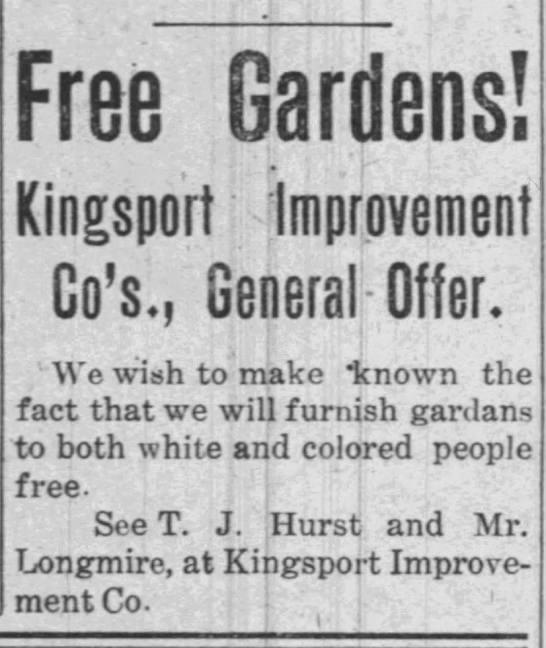
That was pretty progressive for 1917 in the South. While it didn’t solve all of the societal ills nor make excuses for the unfair treatment of all citizens regardless of race and ethnicity, it did set an expectation that every person would have a place in this emerging Model City.
 Kingsport Spirit
Leave a comment